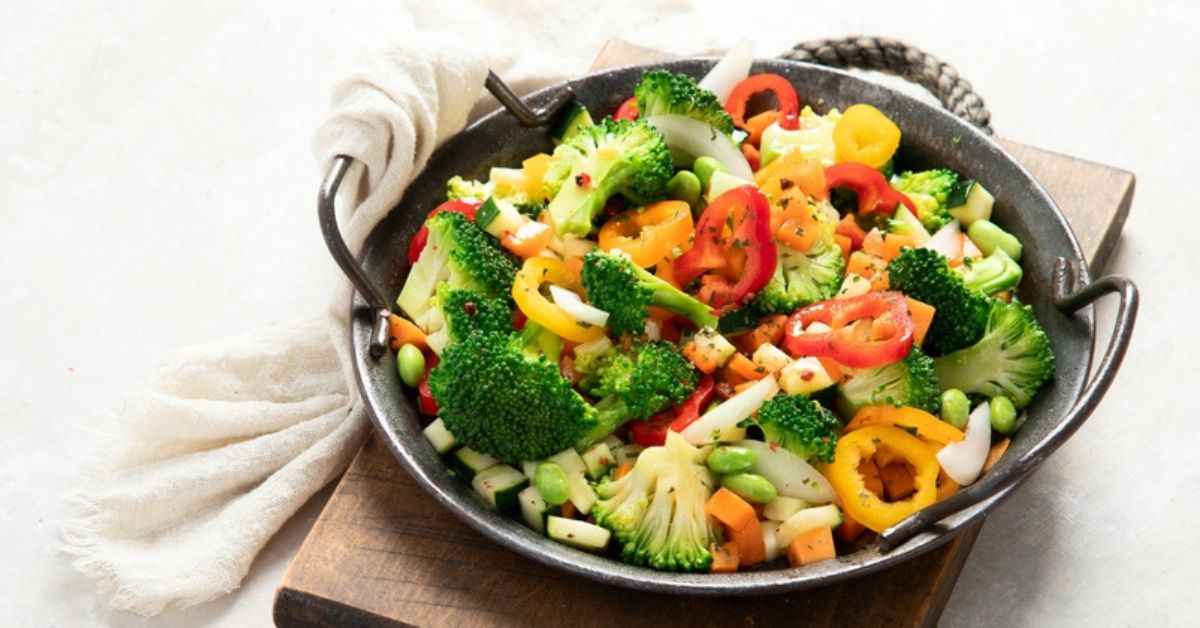
Every summer, my garden produces more vegetables than my family can eat fresh. Zucchini multiplies overnight. Peppers ripen faster than I can pick them. Bok choy bolts if I don’t harvest quickly enough.
That’s when the wok becomes my best friend.
My neighbor Maria taught me her grandmother’s technique for stir frying garden vegetables. “The secret,” she said, flipping snap peas and carrots with practiced ease, “is knowing which vegetables to add when. Get the order wrong, and you have mush. Get it right, and everything is perfectly crisp.”
She was right. Stir frying has been a cooking method for over 2,000 years. It’s fast—dinner in under 15 minutes. It’s healthy—vegetables retain up to 90% of their nutrients with quick, high-heat cooking. And for gardeners drowning in summer produce, it’s a lifesaver.
This guide covers the best stir fry vegetables, how to prepare them, when to add them to the wok, and which combinations taste amazing together.
Understanding Stir Fry Vegetables
What Makes a Good Stir Fry Vegetable?
Not every vegetable works well in a stir fry. The best ones share certain qualities.
They hold up under high heat. They cook quickly without turning to mush. They keep their color and texture after cooking. They absorb sauces and seasonings well.
Think about the difference between a bell pepper and a ripe tomato. The pepper stays crisp and vibrant. The tomato collapses into sauce. Both have their place, but one is clearly better for stir frying.
The ideal stir fry vegetable provides contrast—either in texture, flavor, or color. This is why the best stir fry dishes combine several vegetables rather than featuring just one.
Benefits of Stir Frying
Why stir fry instead of steaming or roasting?
Speed. From cutting board to table in 10-15 minutes.
Nutrition. High heat for a short time preserves vitamins better than long, slow cooking. Research shows stir-fried vegetables retain more vitamin C than boiled or steamed vegetables.
Flavor. That quick sear caramelizes natural sugars and creates depth that steaming can’t match. The Chinese call it “wok hei”—the breath of the wok.
Minimal oil. A tablespoon or two is all you need. Compare that to deep frying or even roasting, where vegetables often swim in oil.
Versatility. Any cuisine, any dietary preference. Stir frying works for everyone.
Complete Stir Fry Vegetables List by Category
Cruciferous Vegetables
These sturdy vegetables are stir fry workhorses.
Broccoli is the classic choice. Both florets and stems work—just peel and slice the stems thin. They actually taste sweeter than the florets.
Bok choy cooks beautifully. The white stems stay crunchy while the green leaves wilt tender. Baby bok choy can be halved and cooked whole.
Napa cabbage wilts quickly and absorbs sauce. Shred it for quick cooking. It’s lighter than regular cabbage and works in almost any Asian-style stir fry.
Cauliflower has a neutral flavor that picks up whatever sauce you add. Cut florets small for faster cooking.
Brussels sprouts work if you halve or shred them. They caramelize beautifully at high heat.
Cabbage adds bulk and crunch. Shred it thin. A head of cabbage can stretch a stir fry to feed a crowd.
Peppers of All Kinds
Peppers are stir fry essentials. They cook quickly, hold their shape, and add color.
Bell peppers come in red, yellow, orange, and green. Red and yellow are sweetest. Green is slightly bitter. Use all colors for a vibrant dish.
Jalapeños add heat. Remove the seeds and membranes for milder flavor. Leave them in if you like it hot.
Thai chilies pack intense heat in a tiny package. One or two can spice an entire dish.
Poblano peppers bring mild heat with earthy flavor. Cut them into strips.
Fun fact about bell peppers: red peppers have three times more vitamin C than green ones. Same plant, different ripeness, different nutrition.
Alliums: The Flavor Foundation
Every great stir fry starts with alliums. These are the aromatics that build flavor.
Garlic is non-negotiable. Mince it or slice it thin. Add it early to infuse the oil, but watch carefully—burned garlic tastes bitter.
Ginger adds warmth and brightness. Fresh ginger, minced or julienned. Don’t substitute the dried powder.
Onions—yellow, white, or red—provide sweetness when cooked. Cut in wedges or half-moons so pieces hold together.
Green onions (scallions) serve double duty. Add the white parts with aromatics at the start. Sprinkle the green parts on top as garnish.
Shallots are gentler than onions. They almost melt into the dish, adding sweetness without sharp bite.
Professional chef tip: add aromatics when the oil shimmers but before it smokes. Cook them for 30 seconds until fragrant. Then add vegetables.
Asian Vegetables
These vegetables appear in traditional Asian stir fry dishes. Many are now available at regular grocery stores.
Snow peas are flat, entirely edible pods. They cook in seconds. That sweet crunch is distinctive.
Sugar snap peas are rounder, sweeter, and crunchier than snow peas. Equally quick cooking.
Bean sprouts add fresh crunch. Toss them in at the very end—30 seconds maximum. Overcooking turns them limp.
Water chestnuts stay crunchy even after long cooking. Canned work fine. Rinse them before adding.
Bamboo shoots have mild flavor and interesting texture. Usually sold canned. Rinse well.
Baby corn looks adorable and tastes tender. Another canned staple that works well.
Chinese broccoli (gai lan) has thicker stems than regular broccoli. Slightly bitter, pairs perfectly with oyster sauce.
If you grow bok choy or Napa cabbage in your garden, harvest them young and tender. They’re perfect for stir frying at that stage.
Root Vegetables
Root vegetables need attention in stir fry. Their density means they cook slower than everything else.
Carrots are classic. Cut them thin—julienne or bias-cut (diagonal slices). Thick chunks will be raw when everything else is done.
Daikon radish turns mild and tender when cooked. Slice thin. It absorbs sauce beautifully.
Jicama stays crunchy no matter how long you cook it. Slightly sweet, refreshing texture.
Ginger counts as a root. We covered it with aromatics, but it’s worth mentioning again—nothing replaces fresh ginger.
For denser root vegetables like sweet potatoes or beets, pre-cook them before stir frying. Steam, roast, or blanch first. Then add them to the wok for a final sear.
Squash and Zucchini
Summer squash is a stir fry staple, especially when your garden is producing more than you can handle.
Zucchini cooks quickly. Slice it into half-moons or cut lengthwise into strips. Don’t add too much—it releases water and can make the dish soggy.
Yellow squash works just like zucchini. Using both adds visual variety.
Chayote is popular in Asian cooking. It has cucumber-like texture and stays crisp. Peel it and cut into thin slices.
A word of caution: squash releases moisture. Add it to a very hot wok and don’t overcrowd. If the wok temperature drops, vegetables steam instead of sear.
Leafy Greens
Greens wilt fast. Add them at the very end of cooking.
Spinach disappears almost instantly in a hot wok. A huge pile becomes a small portion in seconds.
Bok choy leaves (the green parts) cook much faster than the stems. Add stems early, leaves late.
Kale needs the tough stems removed. The leaves take a bit longer than spinach—maybe a minute.
Mustard greens have peppery bite. Quick cooking keeps that kick.
Swiss chard has stems and leaves that cook at different rates. Cut stems into small pieces and add early. Add leaves at the end.
Mushrooms
Mushrooms add meaty depth to vegetable stir fry. They’re especially good for plant-based meals.
Shiitake mushrooms are classic. Remove the tough stems. The caps are earthy and meaty.
Cremini (baby bella) mushrooms are firm and robust. Quarter them or slice thick.
Oyster mushrooms are delicate. Tear them into pieces rather than cutting.
King oyster mushrooms have thick stems with meaty texture. Slice them lengthwise or into rounds.
Enoki mushrooms are delicate. Add them at the end or use raw as garnish.
Mushrooms absorb oil, so add them to an already hot wok with good oil coverage. Don’t crowd them—they’ll steam instead of browning.
How to Prepare Vegetables for Stir Fry
Cutting Techniques Matter
How you cut vegetables affects how they cook.
Julienne means thin matchsticks. Perfect for carrots and bell peppers. Everything cooks evenly at this size.
Bias cut means diagonal slices. This exposes more surface area for sauce absorption. Great for asparagus, celery, and Chinese broccoli.
Uniform size is the key rule. If some pieces are thick and others thin, cooking will be uneven. Cut everything the same thickness.
For a single stir fry, prepare all vegetables before you start cooking. Stir frying moves fast—there’s no time to stop and slice.
The Mise en Place Rule
Here’s what I learned the hard way: have everything ready before you heat the wok.
Cut vegetables. Measure sauce ingredients. Mince garlic and ginger. Line everything up in order of addition.
Once the wok gets hot, you have seconds between stages. Stopping to chop something means burned garlic and unevenly cooked vegetables.
Professional kitchens call this “mise en place”—everything in its place. For stir fry, it’s not optional.
Should You Blanch First?
Blanching means briefly boiling vegetables, then shocking them in ice water.
For home cooking, it’s usually unnecessary. But for certain vegetables, it helps:
Broccoli benefits from 1-2 minutes of blanching. It shortens stir fry time and keeps color vibrant.
Green beans can be blanched for 2-3 minutes. They’ll be crisp-tender instead of squeaky-raw.
Dense root vegetables like carrots can be blanched if you want them softer than standard stir frying allows.
Restaurants blanch almost everything. It lets them assemble stir fry dishes in 2-3 minutes. At home, it’s your choice.
When to Add Each Vegetable
This is where most people go wrong. Timing is everything.
Add First: Longest-Cooking Vegetables
These need the most time in the wok. Add them right after aromatics.
- Carrots (unless cut very thin)
- Broccoli stems
- Cauliflower florets
- Green beans
- Celery stalks
Give these 3-4 minutes before adding the next group. Keep them moving to prevent burning.
Add Next: Medium-Cooking Vegetables
These need 2-3 minutes.
- Bell peppers
- Zucchini and yellow squash
- Mushrooms
- Asparagus
- Bok choy stems
- Snap peas and snow peas
- Broccoli florets
- Cabbage (shredded)
Add these once the first group is about half cooked. The mixture should sizzle constantly.
Add Last: Quick-Cooking Vegetables
These need under a minute. Often just 30 seconds.
- Bean sprouts
- Spinach and leafy greens
- Bok choy leaves
- Tomatoes
- Green onion greens
- Pre-cooked vegetables
- Canned vegetables (water chestnuts, baby corn)
Add these just before the sauce. They wilt or heat through almost instantly.
Best Vegetable Combinations
Classic Chinese Style
Broccoli + garlic + oyster sauce. Simple. Satisfying. Everyone’s favorite.
Bok choy + shiitake + ginger. Earthy and balanced.
Mixed vegetables + water chestnuts + soy sauce. This is takeout at home.
Green beans + garlic + fermented black beans. Sichuan classic with deep flavor.
Color-Balanced Combinations
Eating the rainbow isn’t just pretty—it’s nutritionally smart.
Try combining:
- Red bell pepper (red)
- Carrots (orange)
- Yellow squash (yellow)
- Broccoli (green)
- Red onion (purple)
- Mushrooms (white/brown)
This combination hits every color and provides diverse vitamins and minerals.
High-Protein Vegetable Stir Fry
For substantial meatless meals:
Broccoli + edamame + firm tofu. Complete protein combination.
Mushroom trio + asparagus + cashews. Meaty texture without meat.
Bok choy + snap peas + tempeh. Quick and protein-rich.
Essential Stir Fry Tips
Heat Is Everything
The wok should be smoking hot before oil goes in. This creates the sear that distinguishes stir fry from steamed vegetables.
If vegetables release water and sit in liquid, your heat is too low. If they’re scorching while still raw inside, your heat is too high (or pieces are too large).
Most home stoves don’t get as hot as restaurant burners. That’s okay. Just don’t overcrowd the wok.
Don’t Overcrowd
This is the number one mistake home cooks make.
Too many vegetables in the wok drops the temperature. Suddenly you’re steaming, not searing. Everything gets soggy.
Cook in batches if needed. Remove the first batch, cook the second, then combine. It’s an extra step, but the results are worth it.
Keep Things Moving
Toss and stir every 15-30 seconds. This prevents burning and ensures even cooking.
The classic wok flip takes practice. Until you master it, use a spatula to keep vegetables moving.
Add Sauce at the End
Vegetables should be 90% cooked before sauce goes in.
Push vegetables to the sides. Add sauce to the center. Let it bubble and thicken for 15-30 seconds. Then toss everything together.
Adding sauce too early creates steam and makes vegetables soggy.
Common Mistakes to Avoid
- Not prepping everything before heating the wok
- Using cold or barely warm cooking surface
- Overcrowding with too many vegetables at once
- Adding wet vegetables (pat them dry first)
- Cooking vegetables too long
- Adding sauce too early
Get these basics right, and your stir fry will rival restaurant quality.
Final Thought
My neighbor Maria was right about the order mattering. The summer I learned her technique, I stir fried my way through an absurd zucchini surplus without a single mushy dish.
Now when the garden produces more than we can eat fresh, the wok comes out. Bell peppers, bok choy, snap peas, broccoli—all of it cooks into quick, healthy dinners in minutes.
That’s the beauty of stir fry vegetables. They turn abundance into dinner, fast.