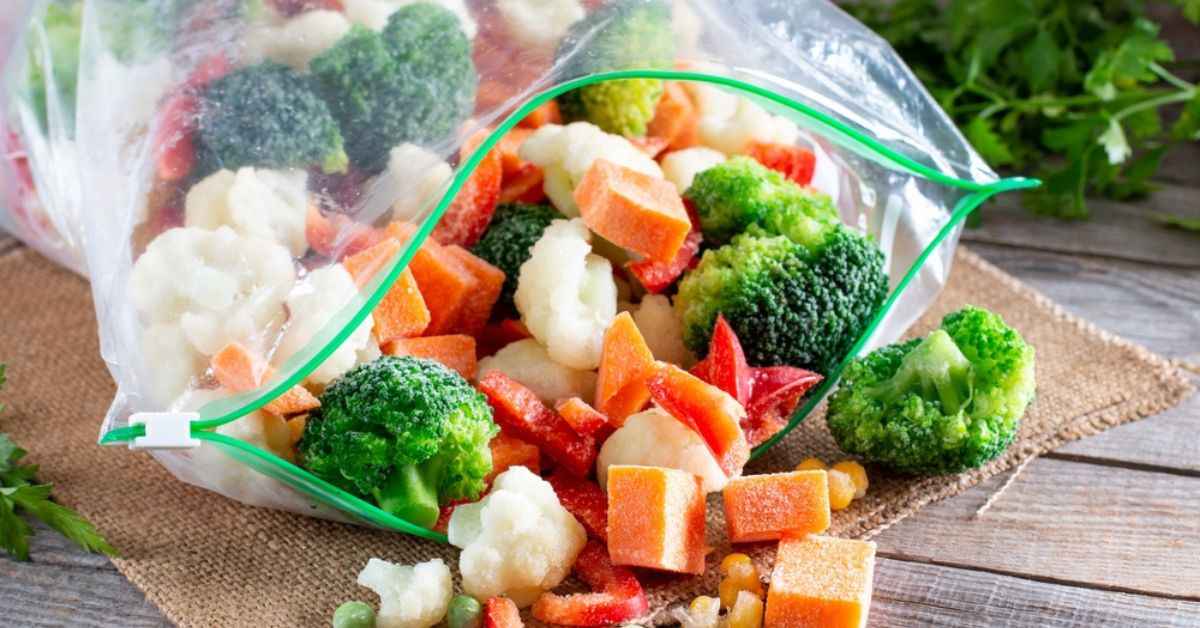
Last summer, my neighbor Maria had a bumper crop of green beans. More than her family could possibly eat. She blanched and froze about 30 pounds of them.
“I feel bad feeding my kids frozen vegetables,” she told me later that winter. “It’s like giving them second-best.”
I had to set her straight. Those frozen green beans from her garden? They were probably more nutritious than the “fresh” green beans at the grocery store that had traveled 1,500 miles over five days.
This surprised her. It surprises most people.
According to research published in the Journal of Food Composition and Analysis, frozen vegetables retain up to 90% of their nutrients compared to fresh. Sometimes frozen beats fresh—especially when “fresh” has been sitting around for a while.
So are frozen vegetables as healthy as fresh? The science gives us a clear answer, and it might change how you think about your grocery shopping.
Are Frozen Vegetables as Healthy as Fresh?
Why This Question Matters
Most Americans don’t eat enough vegetables. The CDC says only about 10% of adults meet the recommended daily intake of 2-3 cups.
One reason? People think fresh is the only healthy option. Fresh vegetables go bad quickly. Shopping for them takes time. Preparation takes effort.
If frozen vegetables are just as nutritious—and the science says they often are—that removes a major barrier. You can always have healthy vegetables ready in your freezer.
The USDA Dietary Guidelines confirm that frozen vegetables count equally toward your daily vegetable goals. Both forms deliver the vitamins, minerals, and fiber your body needs.
Common Misconceptions About Frozen Vegetables
Let’s clear up some myths:
Myth: Frozen vegetables are processed junk food. Reality: Most frozen vegetables contain exactly one ingredient—the vegetable itself. No preservatives. No additives. Just vegetables.
Myth: Freezing destroys all nutrients. Reality: Flash-freezing actually preserves nutrients by stopping the degradation process. Fresh vegetables continue losing nutrients every day after harvest.
Myth: Fresh is always more nutritious. Reality: Fresh vegetables that have traveled far and sat in stores for days often have fewer nutrients than frozen vegetables processed within hours of harvest.
Myth: Frozen vegetables taste terrible. Reality: Modern freezing technology preserves flavor remarkably well. The texture changes slightly, but flavor remains.
What “Fresh” Really Means at the Store
Here’s something most shoppers don’t realize: those “fresh” vegetables at the grocery store might be weeks old.
Consider the journey. Vegetables get harvested on a farm—maybe in California, maybe in Mexico, maybe in Chile. They go to a packing facility. They get loaded onto trucks. They travel across the country. They sit in distribution centers. They finally reach your store. Then they sit on shelves until you buy them.
Total time? Often 7-14 days. Sometimes longer for imported produce.
Food scientist Dr. Barbara Klein notes: “What consumers call ‘fresh’ produce is often anything but. By the time it reaches the average supermarket, it may have already lost a significant percentage of its vitamin content.”
During all that time, nutrients keep degrading. Vitamin C is especially vulnerable. Fresh broccoli can lose 50% of its vitamin C within a week of harvest.
The Science Behind Flash-Freezing Vegetables
How Flash-Freezing Works
Commercial vegetable freezing is a precise process:
- Harvest at peak ripeness: Vegetables are picked when nutrients are highest
- Quick transport: Usually within hours of harvest
- Blanching: Brief exposure to hot water or steam
- Rapid freezing: Temperatures of -30°F or lower
- Packaging and storage: Kept at 0°F for long-term stability
The key is speed. From field to frozen package often takes less than 10 hours. This captures vegetables at their nutritional peak.
Read more: Pura Vida Frozen Vegetables: Complete Product Guide 2025
Why Blanching Matters
Blanching means briefly heating vegetables before freezing. This step is important.
Vegetables contain enzymes that cause them to degrade over time. These enzymes break down color, texture, flavor, and nutrients. Blanching deactivates these enzymes.
Yes, blanching causes some vitamin loss. Water-soluble vitamins like vitamin C and some B vitamins decrease slightly. But this small initial loss is a trade-off for long-term stability.
Without blanching, frozen vegetables would continue degrading—just slower than fresh. With blanching, degradation essentially stops.
How Freezing Preserves Nutrients
Once vegetables are frozen, time stands still nutritionally speaking.
At 0°F, the chemical reactions that cause nutrient loss slow to nearly nothing. A bag of frozen broccoli has virtually the same nutrition after one month, three months, or six months.
Compare this to fresh broccoli. Day 1: peak nutrition. Day 3: vitamin C down 20%. Day 7: vitamin C down 50%. Day 10: who knows what’s left.
Research from the University of Chester found that in two out of three cases, frozen produce had higher vitamin content than fresh produce that had been stored in a refrigerator for just three days.
Nutritional Comparison: Frozen vs. Fresh
Vitamin Retention
Different vitamins behave differently:
Vitamin C: Most vulnerable to degradation. Frozen vegetables often contain more vitamin C than fresh vegetables that have been stored for several days. One study found frozen broccoli retained significantly more vitamin C than fresh broccoli stored for 5 days.
Vitamin A: Stable in both forms. Beta-carotene (which converts to vitamin A) holds up well whether frozen or fresh.
B Vitamins: Some loss during blanching, but then stable in frozen storage. Fresh vegetables continue losing B vitamins during storage.
Vitamin K: Remains stable in both frozen and fresh vegetables.
Folate: Often better retained in frozen vegetables. Fresh vegetables lose folate quickly at room temperature.
A 2017 University of California Davis study compared fresh, fresh-stored (5 days in refrigerator), and frozen forms of eight vegetables. Frozen matched or exceeded fresh-stored in most nutrient comparisons.
Mineral Content
Good news here: minerals don’t really care about freezing.
Iron, calcium, potassium, magnesium, zinc—these minerals remain stable whether vegetables are frozen or fresh. Mineral content depends more on soil quality where the vegetables grew than on how they’re stored.
If you’re eating vegetables for minerals, frozen works just as well as fresh.
Antioxidant Levels
Antioxidants help fight cell damage in your body. Many people specifically eat vegetables for these compounds.
Research shows:
- Polyphenols (a class of antioxidants) are well-preserved through freezing
- Beta-carotene in frozen carrots and spinach matches fresh
- Lycopene in tomatoes is unaffected by freezing
- Some studies show frozen berries have higher antioxidant activity than fresh
One study in the Journal of the Science of Food and Agriculture found that frozen blueberries actually had higher antioxidant activity than fresh blueberries stored for three days.
Fiber Content
Fiber is completely unaffected by freezing. The cell walls that provide fiber remain intact through the flash-freezing process.
A cup of frozen broccoli has the same fiber as a cup of fresh broccoli. Both provide about 5 grams of fiber per serving.
If you’re eating vegetables for digestive health, frozen delivers equally.
Specific Vegetable Comparisons
Broccoli: Frozen vs. Fresh
Broccoli is one of the most nutritious vegetables you can eat. How does it hold up to freezing?
Vitamin C: Frozen broccoli retains more vitamin C than week-old fresh broccoli. Fresh broccoli loses about 50% of its vitamin C within 7 days of harvest.
Glucosinolates: These cancer-fighting compounds are well-preserved in frozen broccoli.
Fiber: Identical in both forms.
Verdict: Frozen broccoli is often more nutritious than fresh broccoli from the grocery store. If you grow your own and eat it within 2-3 days, fresh wins.
Spinach: Frozen vs. Fresh
Spinach degrades faster than almost any other vegetable. Fresh spinach wilts within days.
Folate: Significantly higher in frozen spinach. Fresh spinach loses folate rapidly.
Vitamin A: Well-preserved in both forms.
Iron: Identical in both forms.
Verdict: Frozen spinach is an excellent choice. It’s also more concentrated—you get more spinach per serving than with fresh.
Peas: Frozen vs. Fresh
Here’s a fun fact: most “fresh” peas at the store aren’t fresh at all. Fresh peas are rarely sold because they lose sweetness so quickly after harvest.
Sweetness: Frozen peas are often sweeter than store-bought “fresh” peas. The sugar-to-starch conversion stops when peas are frozen.
Vitamin C: Well-retained in frozen peas.
Protein: Same in both forms—about 8 grams per cup.
Verdict: Frozen peas are often superior to store-bought fresh peas. Garden-fresh peas eaten the same day are unbeatable, but that’s rare for most people.
Green Beans: Frozen vs. Fresh
Green beans freeze exceptionally well.
Vitamin C: Similar retention when fresh beans are truly fresh.
Fiber: Identical in both forms.
Texture: Frozen beans are slightly softer after cooking.
Verdict: Both are excellent options. Fresh green beans from a garden or farmers market have a slight edge for texture.
Corn: Frozen vs. Fresh
Corn is another vegetable that changes quickly after harvest. Sugar converts to starch within hours.
Sweetness: Frozen corn maintains sweetness because the conversion stops at freezing.
B Vitamins: Comparable in both forms.
Verdict: Frozen corn is excellent. Fresh seasonal corn eaten the same day it’s picked is amazing—but that’s a limited window.
Benefits of Frozen Vegetables
Convenience
No washing. No peeling. No chopping. Open the bag and cook.
For busy people, this matters. The easier vegetables are to prepare, the more likely you’ll actually eat them.
Cost-Effectiveness
Frozen vegetables are often cheaper per serving than fresh. Plus, there’s no waste. You use what you need and save the rest.
Americans throw away 30-40% of fresh produce. That’s money in the garbage.
Price comparison for common vegetables:
- Frozen broccoli: ~$2.00 per pound
- Fresh broccoli: ~$2.50-3.00 per pound (plus waste from stems)
- Frozen peas: ~$1.50 per pound
- Fresh peas: ~$4.00 per pound (when available)
Year-Round Availability
Want asparagus in December? Frozen has you covered. Looking for corn in March? It’s in your freezer.
Seasonal eating is wonderful, but frozen vegetables fill the gaps.
Reduced Food Waste
This deserves emphasis. According to the USDA, households waste billions of dollars of produce every year. Frozen vegetables essentially eliminate this problem.
Use half a bag tonight. The rest stays frozen for weeks or months. No rush. No waste.
Long Shelf Life Without Preservatives
Frozen vegetables last 8-12 months in a properly maintained freezer. No preservatives needed—the cold does all the work.
Check the ingredient list on any bag of frozen peas. It says: “Peas.” That’s it.
When Fresh Vegetables Win
Fresh vegetables do have advantages in certain situations.
Texture and Taste for Raw Eating
You can’t make a salad with frozen lettuce. Frozen cucumbers turn mushy. For raw applications, fresh is necessary.
The crunch and crispness of fresh vegetables can’t be replicated by frozen.
Truly Local and Seasonal Produce
Vegetables from your garden eaten the same day? Nothing beats that.
Farmers market produce picked that morning? That’s genuinely fresh.
When you have access to truly fresh vegetables—not store “fresh” that’s been traveling for days—the nutritional advantage tips toward fresh.
Greater Variety
Some vegetables aren’t commonly available frozen. Specialty and heirloom varieties are usually fresh-only. Farmers markets offer diversity that freezer aisles can’t match.
Better for Certain Cooking Methods
Grilling and roasting often work better with fresh vegetables. Stuffed peppers need fresh peppers. Some presentation-focused dishes require fresh produce.
Practical Recommendations
Maximize Nutrition From Both Options
For fresh vegetables:
- Buy only what you’ll use within a few days
- Store properly in the refrigerator crisper drawer
- Don’t wash until ready to use
- Consume quickly after purchase
For frozen vegetables:
- Keep freezer at 0°F or below
- Use within 8-12 months for best quality
- Don’t let packages thaw and refreeze
- Check ingredients for added sodium or sauces
For cooking both:
- Steam or microwave to preserve nutrients
- Avoid boiling—nutrients leach into the water
- Cook just until done—don’t overcook
- Use minimal water
Smart Shopping Strategy
Here’s what I recommend:
- Buy fresh vegetables for raw eating and immediate use
- Keep frozen vegetables stocked for cooked dishes
- When fresh vegetables are in season and local, prioritize fresh
- When out of season, choose frozen over “fresh” that’s traveled far
- Check labels on frozen vegetables—avoid added ingredients
Registered dietitian Lisa Young says it well: “The best vegetable is the one you’ll actually eat. Whether fresh or frozen, what matters is getting vegetables into your diet consistently.”
What the Experts Say
The scientific community has reached consensus on this question:
The Academy of Nutrition and Dietetics considers frozen vegetables nutritionally equivalent to fresh for most purposes.
The USDA MyPlate guidelines count frozen vegetables equally toward daily vegetable recommendations.
The FDA treats frozen and fresh vegetables as nutritionally comparable in their dietary guidance.
Food scientist Dr. Gene Lester summarizes the research: “The bottom line is that freezing is an excellent way to preserve nutrients. In many cases, frozen produce provides equal or better nutrition than fresh produce that’s been stored for several days.”
Final Thought
Back to Maria and her frozen green beans. By January, she was serving them confidently—knowing they contained more nutrients than any green bean she could have bought at the grocery store.
“I actually grew those beans,” she told me. “Picked them at peak ripeness. Froze them within hours. Why would I feel bad about that?”
She was right. Whether you’re freezing your own garden harvest or buying frozen vegetables from the store, you’re making a healthy choice. The science is clear: frozen vegetables are just as healthy as fresh—and sometimes healthier.
The best vegetable for your health is one you’ll actually eat. Fresh or frozen, what matters is getting more vegetables into your diet. Don’t let the frozen-versus-fresh debate stop you from eating your vegetables.