Last August, I harvested about thirty cucumbers in a single week. The plants went absolutely wild after we got three days of steady rain following a dry spell. I was handing them out to neighbors, stuffing them in the fridge, leaving them on my coworkers’ desks.
Then I forgot about five of them in the back of the crisper drawer.
Found them three weeks later. One had turned into something I can only describe as cucumber soup inside its own skin. The smell when I moved it was memorable. Not in a good way.
Here’s the thing: I’ve been growing cucumbers for years, and I still sometimes mess up the storage part. Growing them is one skill. Keeping them fresh is another. And knowing how to tell if a cucumber is bad sits right in the middle.
UK households throw away about 50,000 tonnes of cucumbers every year. That’s a lot of wasted food. A lot of wasted money. And a lot of cucumbers that probably weren’t even bad when they hit the bin.
Let’s fix that.
Quick Summary: How to Tell If a Cucumber Is Bad
A cucumber has gone bad if it shows these signs:
- Texture: Soft, mushy, or slimy.
- Skin: Wrinkled or shrivelled.
- Color: Yellow or brown discolouration.
- Mould: Any visible fuzzy growth.
- Smell: Sour or unpleasant.
Fresh cucumbers should be firm, green, and nearly odourless.
The Clear Signs Your Cucumber Has Gone Bad
What It Looks Like

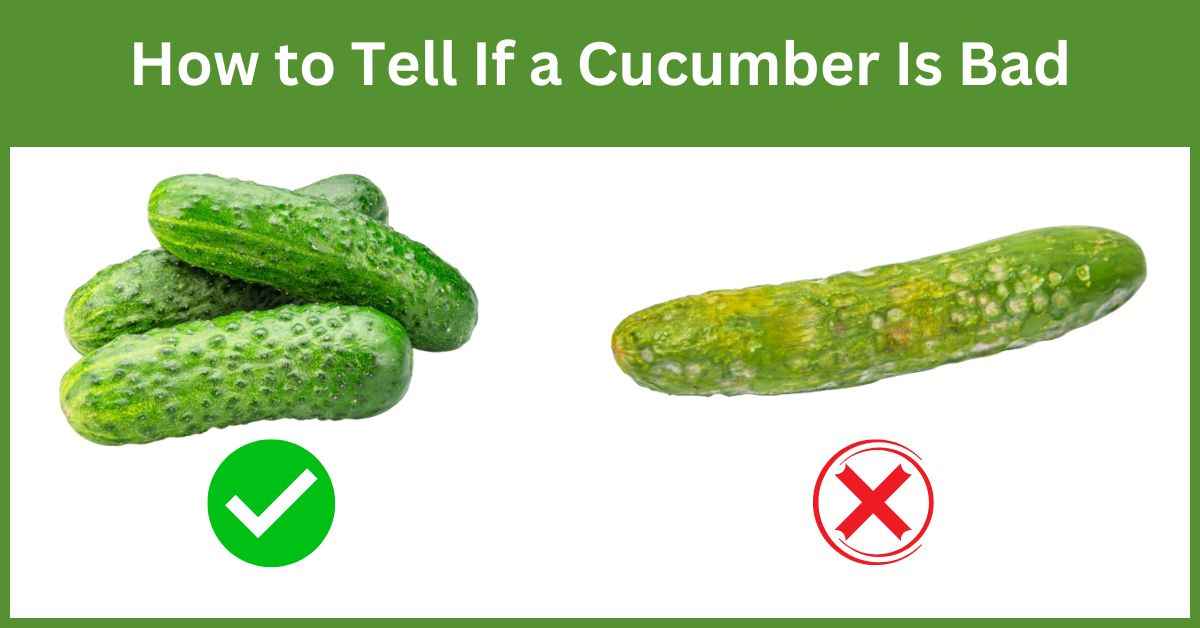
Your eyes catch spoilage first. A fresh cucumber looks green, firm, and uniform. A bad cucumber starts sending signals.
Yellowing skin. Cucumbers turn yellow when they’re overripe on the vine or when they’ve sat too long after harvest. A little yellow at the blossom end? Probably fine. Yellowing all over? The cucumber is past its peak.
Wrinkled, shrivelled skin. Fresh cucumbers are plump with water—about 95% water content. When they start drying out, the skin wrinkles like old fingers after a long bath. The cucumber is dehydrating. It won’t make you sick, but the texture will be rubbery and sad.
Mould spots. White, black, grey, or fuzzy green patches. This is the big one. If you see mould, the cucumber is done. Don’t try to save it. Mould sends invisible threads called hyphae deep into soft foods like cucumbers. What you see on the surface is just the tip.
Dark, water-soaked patches. These look wet and sunken. Often brown or translucent. This is bacterial breakdown happening. The tissue is literally rotting.
Discoloured flesh inside. Cut the cucumber open. The flesh should be pale green or white, crisp, and uniform. If it’s brown, slimy, or has dark spots near the seeds, something has gone wrong.
What It Feels Like
Pick up the cucumber. Give it a gentle squeeze.
Soft or mushy spots. Fresh cucumbers are firm throughout. When you press, there should be very little give. Soft spots mean that area is breaking down. Sometimes you can cut around small soft spots if the rest is still firm. Sometimes the whole thing is compromised.
Slimy skin. This is bad news. The slime is bacterial film. It means decomposition is well underway. If your cucumber feels like it’s covered in snot, throw it out.
Rubbery or bendy. A fresh cucumber resists bending. If it flops around like a piece of rubber, moisture loss has changed the cell structure. Still technically safe to eat, but the texture will be disappointing.
Hollow or dried out inside. Cut it open and find big empty spaces? Or dry, cottony flesh? The cucumber is too old. This happens faster with cucumbers that weren’t stored properly or that were already aging when you picked or bought them.
What It Smells Like
Fresh cucumbers smell like almost nothing. Maybe a faint green, clean scent. Very mild.
Bad cucumbers smell like trouble.
Sour or acidic. If it smells like vinegar or something fermented, bacteria have been working on it. That’s decomposition.
Off or just wrong. Hard to describe, but you know it when you smell it. That “this doesn’t seem right” feeling is usually accurate. Trust it.
Strong unpleasant odour. Any cucumber that smells bad is bad. Period. Don’t talk yourself into eating it.
How Long Do Cucumbers Actually Last?
This varies a lot based on how you store them and what condition they were in when you started.
General Timeline
On the counter at room temperature: 1-2 days max. Cucumbers are tropical plants. They don’t love the cold, but they really don’t love sitting out in a warm kitchen.
In the fridge, whole: 1-2 weeks. This is your standard storage situation. Whole cucumbers in the crisper drawer will hold for about 7-10 days on average. Sometimes longer if they were very fresh when they went in.
In the fridge, sliced: 1-2 days. Cut cucumbers start deteriorating fast. The exposed flesh dries out and oxidizes. Use them quickly.
Frozen: 2-3 months. But here’s the catch—frozen cucumbers turn mushy when thawed. They’re only good for smoothies, infused water, or cooked dishes after freezing. Forget about fresh salads.
What Affects Freshness
Starting quality matters. A cucumber that was already stressed on the vine or handled roughly at the shop will spoil faster than one picked fresh from your garden at peak condition.
Temperature swings. Moving cucumbers in and out of the fridge, or storing them in the door where temperatures fluctuate, speeds up breakdown.
Moisture. Too wet, and they get slimy. Too dry, and they shrivel. You want moderate humidity.
Ethylene exposure. This is a sneaky one. Many fruits release ethylene gas as they ripen. Bananas are famous for it. Tomatoes, melons, avocados—they all produce ethylene. Store your cucumbers next to these, and the ethylene speeds up cucumber aging dramatically.
Whole vs. cut. Keeping the skin intact protects the flesh inside. Any cut or puncture creates an entry point for bacteria and a surface that dries out.
About Those Best Before Dates
The dates on cucumber packaging are suggestions, not commands.
“Best before” means quality, not safety. The cucumber might still be fine to eat after that date. Or it might have gone bad before the date if storage conditions were poor.
Use your senses. Look at it. Feel it. Smell it. The cucumber will tell you its condition more accurately than any printed date.
You may like: Cucumber Fruit or Veg? The Definitive Answer Explained
How to Store Cucumbers Right
Most cucumber waste happens because of bad storage. Get this right and your cucumbers last significantly longer.
Storing Whole Cucumbers
Temperature sweet spot. Cucumbers actually prefer around 10-12°C (50-54°F). Most fridges run colder than this—around 4°C (39°F). That’s why cucumbers sometimes get cold damage in the fridge: pitting, water-soaked spots, accelerated decay.
If you have a warmer spot in your fridge (door shelf or crisper drawer set to low), use that for cucumbers.
Wrap them. A paper towel wrapped around each cucumber absorbs excess moisture and reduces condensation. Then place them in a loose plastic bag or reusable produce bag. Don’t seal it tight—cucumbers need some air circulation.
Keep away from ethylene producers. Separate drawer if possible. Don’t store cucumbers next to bananas, tomatoes, apples, melons, or stone fruits.
Crisper drawer. Designed for this purpose. Use it.
Don’t wash before storing. Moisture promotes mould growth. Wash cucumbers right before you use them, not when you put them away.
Storing Cut Cucumbers
Once you cut into a cucumber, the clock speeds up.
Cover the cut end. Wrap it with cling film or beeswax wrap. You’re trying to prevent that exposed flesh from drying out and from collecting bacteria.
Airtight container. If you’ve sliced a cucumber, put the slices in a sealed container. A damp paper towel in the container helps maintain humidity without pooling water.
Use within a day or two. Cut cucumbers are borrowed time. Plan to use them soon.
Common Mistakes
Storing near bananas. Classic error. I did this for years before I understood ethylene.
Too-cold fridge spots. The back of the fridge is often coldest. Cucumbers there can get chill injury.
Leaving them unwrapped. They dry out fast.
Washing before storage. Adds moisture that promotes mould.
Forgetting about them. The real killer. Out of sight, out of mind, into the compost bin three weeks later.
Can You Eat a Cucumber That’s Only Partly Bad?
Sometimes yes. Sometimes no.
When You Can Cut Away Bad Parts
If your cucumber has:
- A small soft spot at one end
- Minor surface wrinkling
- A slightly rubbery texture overall
- Some yellowing but no other problems
You can often cut away the affected area, use the rest, and be fine. The key is “small” and “localised.” If most of the cucumber is still firm and fresh-looking, the bad bit was probably just age or minor damage.
When You Throw the Whole Thing
If your cucumber has:
- Any visible mould (even a small spot)
- Slimy texture on more than a tiny area
- Bad smell
- Majority is soft or mushy
- Liquid inside the packaging
It’s gone. All of it. Don’t try to salvage.
Mould spreads through soft foods like cucumbers in ways you can’t see. Cutting around a mould spot doesn’t remove all the contamination. Bacteria work the same way.
Health Risks
Eating spoiled cucumber can cause food poisoning. Symptoms include stomach cramps, nausea, vomiting, and diarrhea. Usually not life-threatening for healthy adults, but unpleasant.
People with compromised immune systems, elderly folks, pregnant women, and young children should be extra cautious. When in doubt, throw it out.
Ways to Use Up Cucumbers Before They Go Bad
If you grow your own, you know the feast-or-famine pattern. Nothing for weeks, then suddenly more cucumbers than you can eat.
Quick Pickles
Take those cucumbers that are starting to get a little soft. Slice them thin. Pack in a jar. Pour over a brine of vinegar, water, salt, sugar, and whatever spices you like. Refrigerate for a few hours. They’ll last another 2-3 weeks as pickles.
This is my go-to solution during cucumber avalanche season.
Cucumber Water
Drop sliced cucumber into a pitcher of water. Refrigerate overnight. You get fancy-tasting water, and you use up cucumbers that were nearing the end.
Smoothies
Cucumbers blend well. Add them to green smoothies with spinach, apple, and ginger. You won’t taste them much, but they add volume and hydration.
Gazpacho
That cold Spanish soup was made for aging cucumbers. Blend them with tomatoes, peppers, garlic, olive oil, and bread. The cucumber disappears into the texture.
Freezing
You can freeze cucumbers for later smoothie use. Slice them, spread on a baking sheet, freeze solid, then transfer to bags. The texture breaks down completely when thawed—they turn to mush—but for blending purposes, that’s fine.
For the Gardeners
If you grow your own cucumbers, you have advantages and challenges store-bought buyers don’t.
Advantage: You know exactly when they were harvested. No mystery about how long they’ve been sitting around.
Challenge: When the plants produce, they really produce. You get overwhelmed.
My advice: Harvest cucumbers slightly smaller than you think you should. A 6-inch cucumber keeps better than an 8-inch one. Smaller cucumbers have thinner seeds, crisper flesh, and more storage life.
And check your plants every day during peak season. Cucumbers left on the vine too long get yellow, bitter, and seedy. They also signal the plant to stop producing. Frequent picking keeps the plant making more.
The Bottom Line
Knowing how to tell if a cucumber is bad comes down to using your senses.
Look: Watch for yellowing, mould, dark spots, wrinkles.
Touch: Feel for softness, slime, rubbery texture.
Smell: Catch sour, fermented, or off odours.
Store properly: Keep whole cucumbers wrapped in paper towel in the fridge, away from ethylene-producing fruits. Use cut cucumbers within a day or two.
And when in doubt? Trust your instincts. That vague “this seems wrong” feeling has evolved over millennia to protect you. If your body says the cucumber is bad, the cucumber is probably bad.
My five forgotten cucumbers from last August taught me that lesson. Again.