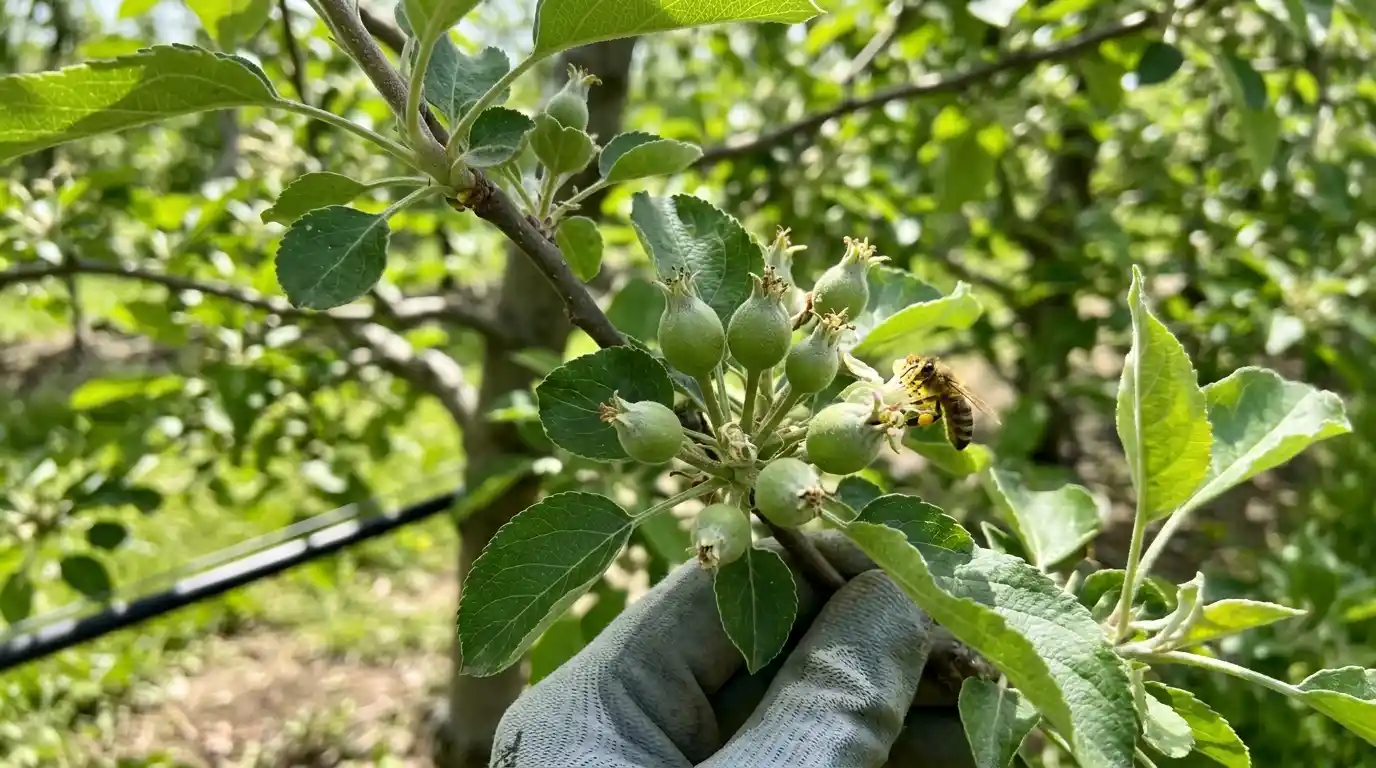
Last spring, my neighbor Tom stood in his backyard staring at his two tomato plants with the kind of frustration only a gardener understands. Both plants were loaded with bright yellow flowers—dozens of them. But week after week, those flowers just dropped off. No tiny green tomatoes. No harvest. Just empty stems where promise used to be.
“What am I doing wrong?” he asked, holding up a handful of fallen blossoms.
This happens to so many home growers. You plant, you water, you wait… and then nothing. Your plants bloom like crazy but your harvest basket stays empty. The problem isn’t always what you’re doing—sometimes it’s what you’re not doing during that critical window when flowers turn into fruit.
That’s what fruit set is all about. And once you understand it, you can fix it.
Understanding Fruit Set — What It Is and Why It Matters
What Is Fruit Set?
Think of fruit set as the moment of truth for your garden. After your plant puts out beautiful flowers and (hopefully) pollination happens, there’s this make-or-break period where the flower either develops into fruit or doesn’t.
Here’s what actually happens: The flower gets pollinated. Fertilization occurs. Then the ovary at the base of that flower starts swelling and developing into what we recognize as fruit. The seeds form inside. Everything has to go right during this stage, or that flower just falls off.
We measure fruit set as a percentage. If you had 100 flowers and 60 of them turned into actual fruits, that’s 60% fruit set. Sounds simple, but getting there? That’s where things get interesting.
Simple definition: Fruit set is the successful development of a fruit from a pollinated flower. It’s the make-or-break moment that determines whether a blossom becomes a harvest or drops to the ground.
Why Flowers Drop Instead of Setting Fruit
My friend Maria once called me nearly in tears about her pepper plants. “They’re flowering!” she said. “But every single flower turns brown and falls off.”
This is probably the most common complaint I hear. And honestly, there are about a dozen reasons why it happens:
The usual suspects:
- Nobody pollinated the flower (or it happened poorly)
- The plant’s missing key nutrients like boron or calcium
- Temperatures went haywire—too hot, too cold, or wild swings between the two
- The plant itself is stressed or unhealthy
- Something’s off with the plant’s hormones
- Too many leaves, not enough energy for fruit
- Bugs or diseases messing with the works
Here’s something that surprises people: even under perfect conditions, most flowers don’t set fruit. Apple trees? They might only convert 5-10% of their blossoms into actual apples. The tree naturally drops the rest. This is normal. The tree can’t possibly support thousands of apples, so it self-regulates.
But when you’re getting way below normal fruit set rates, that’s when you need to investigate.
Normal vs. Poor Fruit Set — What to Expect
Every crop has its own baseline. What’s normal for tomatoes would be terrible for apples.
Here’s what you should expect:
| Crop | Normal Fruit Set % | Poor Fruit Set % |
|---|---|---|
| Tomatoes | 60-80% | Below 40% |
| Peppers | 40-70% | Below 30% |
| Apples | 5-15% | Below 3% |
| Peaches | 10-20% | Below 5% |
| Citrus | 1-3% | Below 0.5% |
| Strawberries | 70-90% | Below 50% |
See how different they are? If your apple tree only sets 8% of its flowers, you’re doing fine. If your tomato plant only sets 8%, something’s wrong.
Knowing your crop’s normal range helps you figure out if you actually have a problem or if Mother Nature is just doing her thing.
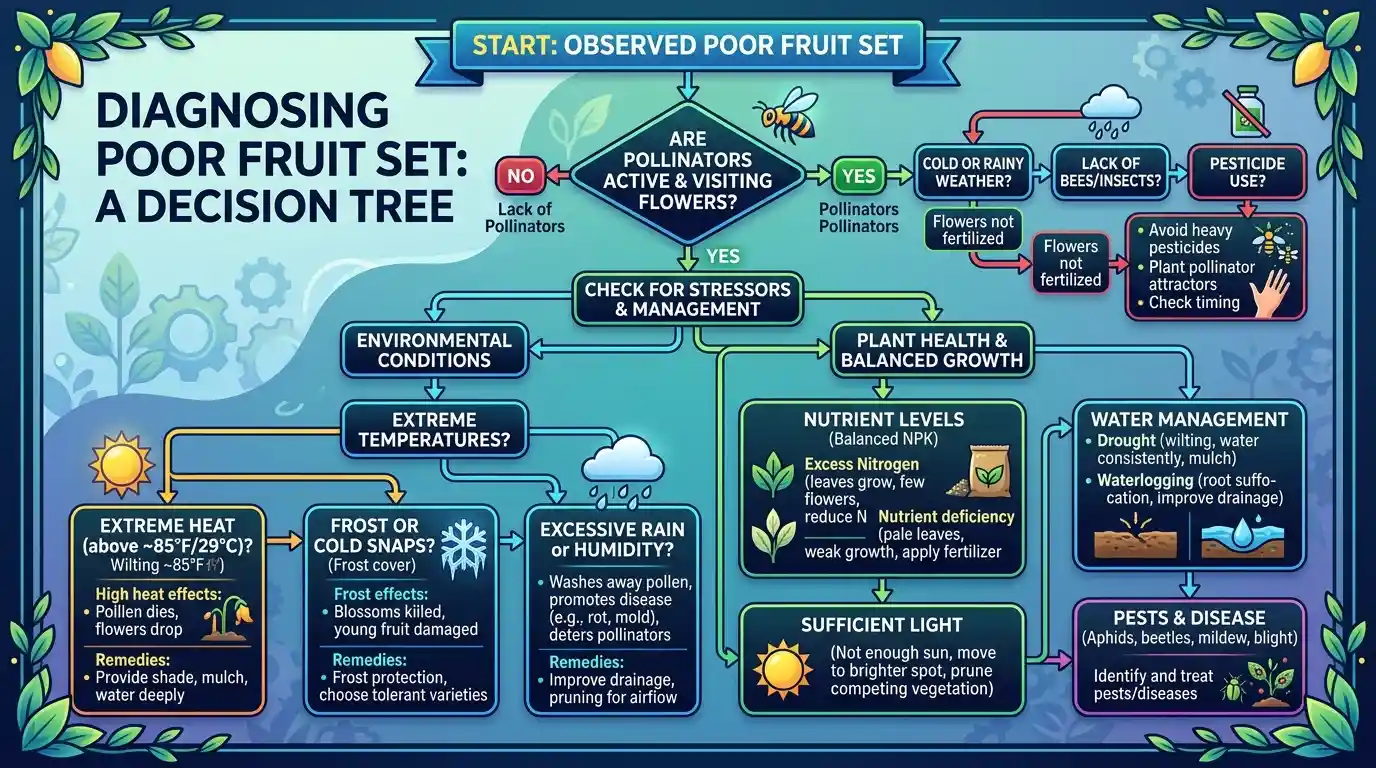
How to Diagnose Poor Fruit Set in Your Garden
Walk through your garden with these questions in mind:
- Are flowers opening but not forming fruit?
- Do you see pollinators visiting blooms?
- Are young fruits dropping shortly after they form?
- Is the plant making tons of leaves but almost no fruit?
- Have temperatures been extreme lately?
- Any signs of bugs or disease?
Sometimes the answer jumps out at you. I visited a greenhouse once where tomatoes were flowering like mad, but there wasn’t a single bee or insect anywhere. Mystery solved—no pollinators meant no fruit set.
Other times, you’ve got to dig deeper. Maybe it’s a nutrient thing. Maybe it’s stress. The good news? Most fruit set problems have solutions.
Optimize Pollination for Better Fruit Set
Understanding the Pollination-Fruit Set Connection
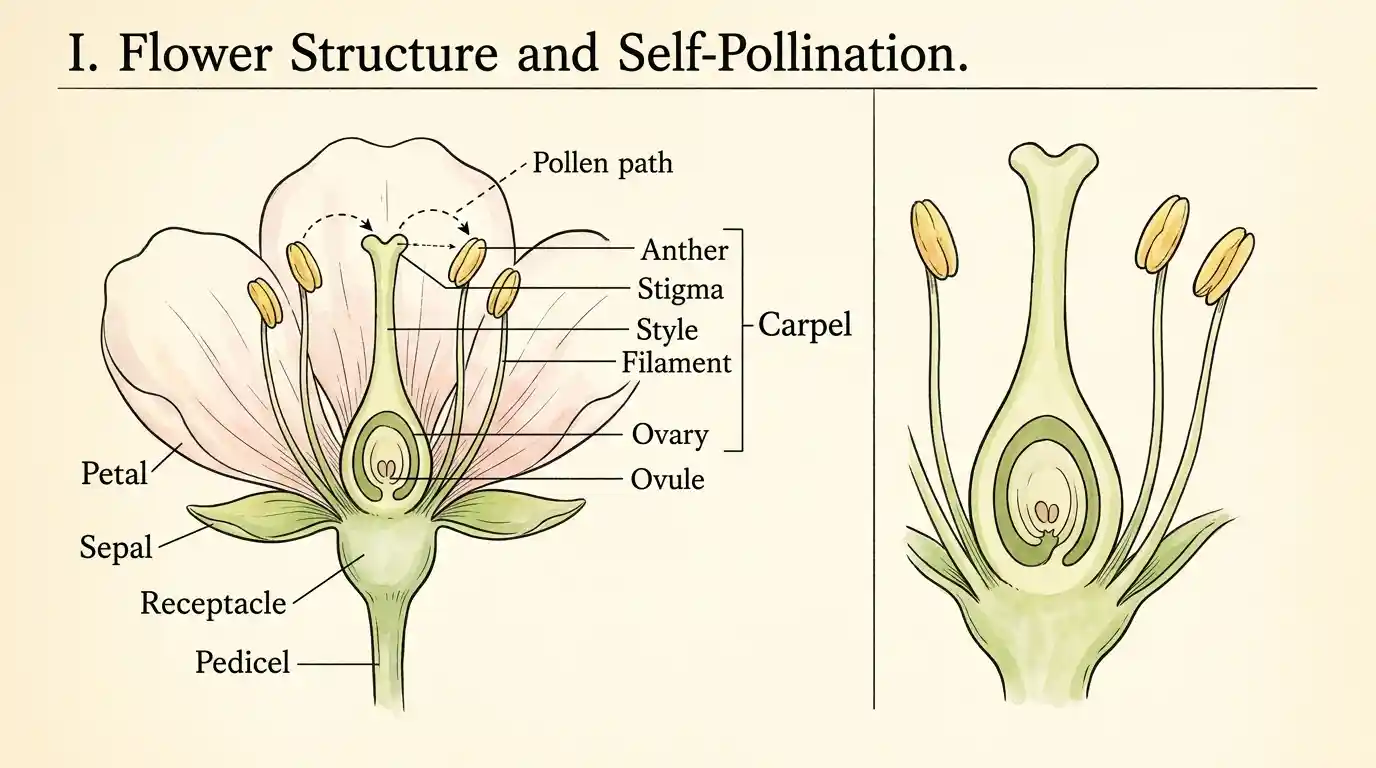
Let me be blunt: without pollination, most plants won’t make fruit. Period. You can have the healthiest plant in the world, perfect soil, ideal temperatures—but if pollen doesn’t get from the male parts to the female parts, nothing happens.
And partial pollination? That gives you weird, lopsided fruits or fruits that start forming then abort.
Some plants can pollinate themselves (tomatoes, peppers, beans). Others need a partner—a different variety of the same type (most apples, pears, cherries). Some need insects to do the heavy lifting. Others rely on wind.
Temperature affects pollen too. When it gets above about 90°F, pollen starts dying. Too cold, and it won’t transfer properly. There’s a sweet spot for every crop.
Research shows: “Adequate pollination is the single most important factor affecting fruit set. Even minor improvements in pollination can dramatically increase yields.”
That’s why focusing on pollination first often solves your fruit set problems right away.
Attract and Support Pollinators
I learned this lesson the hard way. My first garden was nothing but vegetables in neat rows. Beautiful, organized, and… visited by almost zero bees. Then I planted some lavender and borage nearby. Within days, my garden was buzzing. Literally. And my fruit set rates jumped.
Pollinators need three things: flowers for food, water, and safe places to live.
Here’s what works:
- Plant flowers that bloom all season long—not just when your vegetables do
- Choose native flowers when possible (bees evolved with them)
- Skip the pesticides, especially when anything’s flowering
- Put out shallow dishes of water with rocks in them (bees can land and drink)
- Leave some bare ground for ground-nesting bees
Best flowers for pollinators:
- Lavender
- Borage (bees go absolutely crazy for this)
- Sunflowers
- Clover
- Any native wildflowers from your area
Keep these within 300 feet of your fruiting plants. Bees will visit both.
One neighbor planted a pollinator strip along his fence—just a three-foot-wide section of mixed flowers. His cucumber and squash yields went up by about 40% the next year. Same plants, same care, just more bees doing their job.
Hand Pollination Techniques
Sometimes you can’t rely on bees. Maybe you’re growing in a greenhouse. Maybe it’s too cold for pollinators. Maybe they’re just not around.
That’s when you become the bee.
I hand-pollinate my greenhouse tomatoes every year. Takes maybe ten minutes every few days, and my fruit set goes from spotty to nearly 100%.
Here’s how:
What you need: A small paintbrush, a cotton swab, or even an electric toothbrush (seriously, the vibration works great for tomatoes).
Best time: Mid-morning, after any dew dries but before it gets hot. That’s when pollen is most viable.
The process:
- Find an open flower with visible pollen (the yellow dusty stuff on the anthers)
- Collect some pollen on your brush or swab
- Transfer it to the sticky part in the center of the same flower or another flower (the stigma)
- Gently dab or brush—don’t mangle the flower
- Move to the next flower and repeat
For tomatoes, you can just tap the flower stems or use that electric toothbrush trick. The vibration shakes pollen loose and it falls where it needs to go.
Mark pollinated flowers with a piece of yarn if you want to track your success rate. I did this when I was learning and it really helped me see what worked.
Planting for Cross-Pollination Success
Here’s where people get tripped up with fruit trees. They plant one apple tree, wait three years for it to bloom, and then… nothing. No apples.
Why? Because most apple varieties can’t pollinate themselves. They need a different apple variety nearby—one that blooms at the same time.
This is true for a lot of fruit trees:
- Most apples
- Most pears
- Most sweet cherries
- Most plums
- Many blueberries produce better with a partner
What works on its own:
- Peaches
- Nectarines
- Apricots
- Sour cherries
- Most tomatoes, peppers, beans, and squash
| Fruit | Self-Fertile? | What You Need |
|---|---|---|
| Apple | No (most varieties) | 2+ compatible varieties |
| Peach | Yes | Just one tree works |
| Sweet Cherry | No | Needs a different variety nearby |
| Tomato | Yes | Pollinate themselves |
| Blueberry | Sort of | Works better with 2+ varieties |
Plant compatible varieties within 50-100 feet of each other. Check that they bloom at the same time. Your local nursery can help you pick good pairs.
My uncle planted two apple trees without checking compatibility. One bloomed in early April, the other in late April. Almost no overlap. Almost no apples for years until he planted a third tree that bridged the gap.
Using Pollination Aids and Growth Regulators
When I worked at a garden center, we sold spray bottles labeled “Blossom Set Spray” or “Tomato and Pepper Set.” People would ask, “Is this snake oil or does it actually work?”
Answer: It actually works, but it’s not magic.
These sprays contain plant hormones (auxins and gibberellins) that can trigger fruit development even with imperfect pollination. Commercial greenhouse growers use them all the time, especially on tomatoes.
When they help:
- During heat waves when pollen dies
- In greenhouses with poor pollination
- For crops that struggle in your climate
- As insurance during critical flowering periods
When they don’t help:
- If the plant is unhealthy or stressed
- If major nutrients are missing
- If temperatures are really extreme
Follow the label exactly. Too much can cause weird, hollow fruits.
I use blossom set spray on my early spring tomatoes sometimes, just because pollinator activity is low when it’s still cool. My summer tomatoes don’t need it—plenty of bees around by then.
Remember: Growth regulators are supplements, not replacements for good growing practices. Fix your pollination, nutrition, and environment first.
Provide Optimal Nutrition for Fruit Development
The NPK Balance for Flowering and Fruiting
Every bag of fertilizer has three numbers on it. Something like 10-10-10 or 5-10-15. Those numbers tell you how much nitrogen (N), phosphorus (P), and potassium (K) are inside.
Here’s what each one does:
Nitrogen (N): Makes leaves. Lots of green growth. Plants love it, maybe too much. Too much nitrogen and your tomato plant turns into a bush with barely any flowers.
Phosphorus (P): This is your flowering and fruiting nutrient. It helps flowers form and fruits develop. You want more of this during fruit set.
Potassium (K): Makes better quality fruit. Helps with size, flavor, and helps the plant handle stress.
When your plants are young and growing, something like 10-5-5 works fine. But when they start flowering? Switch to something like 5-10-10. Less nitrogen (so they don’t go crazy making leaves), more phosphorus (for flowers and fruit), decent potassium (for quality).
| Growth Stage | NPK Ratio | Why |
|---|---|---|
| Young plants growing | 10-5-5 or 20-10-10 | Leaves and stems |
| Flowering and fruiting | 5-10-10 or 2-3-1 | Better fruit set |
| Fruit developing | 5-10-15 | Bigger, better fruit |
I made this mistake with peppers once. Kept feeding them my regular balanced fertilizer all season. Huge plants, gorgeous leaves, maybe six peppers total. The next year I switched to a blooming formula when flowers appeared. Same variety, same spot, about four times the harvest.
Micronutrients for Fruit Set
Big three nutrients (NPK) get all the attention. But plants also need tiny amounts of other stuff. When these go missing, fruit set crashes even if NPK is perfect.
Boron is the big one for fruit set. Without enough boron, pollen tubes can’t grow properly. Pollination happens but fertilization doesn’t. Flowers drop. You’ll also see:
- Brittle new growth
- Deformed fruits
- Corky spots on fruit
- Flowers falling off before fruiting
Boron deficiency is super common in sandy soils and after heavy rains (it washes away easily).
Calcium prevents blossom end rot and helps cell walls form. Low calcium means weak fruits that abort early.
Magnesium helps the plant move nutrients around and make energy.
Zinc affects hormones and fruit development.
You can spray these directly on leaves during flowering. The plant absorbs them fast—way faster than waiting for roots to pull them from soil.
I use a kelp-based micronutrient spray every couple weeks during flowering. Kelp naturally contains most of the trace elements plants need, plus some growth hormones.
For boron specifically, you can add a tiny amount of borax to water (about half a tablespoon per gallon), but be careful. Too much boron is toxic. Start light.
Organic vs. Synthetic Fertilizers for Fruit Set
People ask which is better. Honest answer? Both have their place.
Organic fertilizers:
- Compost and aged manure (gentle, slow-release, feeds soil life too)
- Bone meal (lots of phosphorus for flowers—but takes time to break down)
- Kelp meal (micronutrients and natural hormones)
- Fish emulsion (quick, gentle, smells terrible)
Organic stuff feeds your soil as much as your plants. The nutrients release slowly over time. You’re less likely to burn plants or cause problems.
Synthetic fertilizers:
- Exact NPK ratios
- Work fast and predictably
- Easy to apply as foliar spray
- Examples: Miracle-Gro Bloom Booster (15-30-15)
Synthetics give you control. When your plants need phosphorus right now during flowering, synthetic delivers it immediately.
I do both. I build my soil with compost and organic amendments all season. Then during critical flowering periods, I supplement with targeted synthetic fertilizers to make sure nothing’s limiting fruit set.
Fertilization Timing and Application Methods
Timing matters as much as what you apply.
Before flowering (2-4 weeks ahead): Apply balanced fertilizer to build plant strength.
Early flowering: Switch to high-phosphorus formula.
During fruit set: Light feeding with complete fertilizer.
After fruits form: Back off nitrogen, keep phosphorus and potassium going.
How to apply:
Soil application: Sprinkle granular fertilizer around the plant’s drip line (where rain falls off the leaves). Water it in. This is your base feeding.
Foliar feeding: Mix liquid fertilizer weaker than label directions. Spray it on leaves in early morning or evening. Plants absorb it through leaves within hours. Great for quick fixes during fruit set.
Fertigation: If you have drip irrigation, inject fertilizer into your water. Plants get fed every time you water.
Side-dressing: For row crops, sprinkle fertilizer in a line beside the plants and scratch it into the soil surface.
I foliar feed my tomatoes and peppers right when fruit set begins. It’s like an insurance policy. The plants get what they need exactly when they need it most.
Manage Environmental Conditions for Optimal Fruit Set
Temperature Requirements for Successful Fruit Set
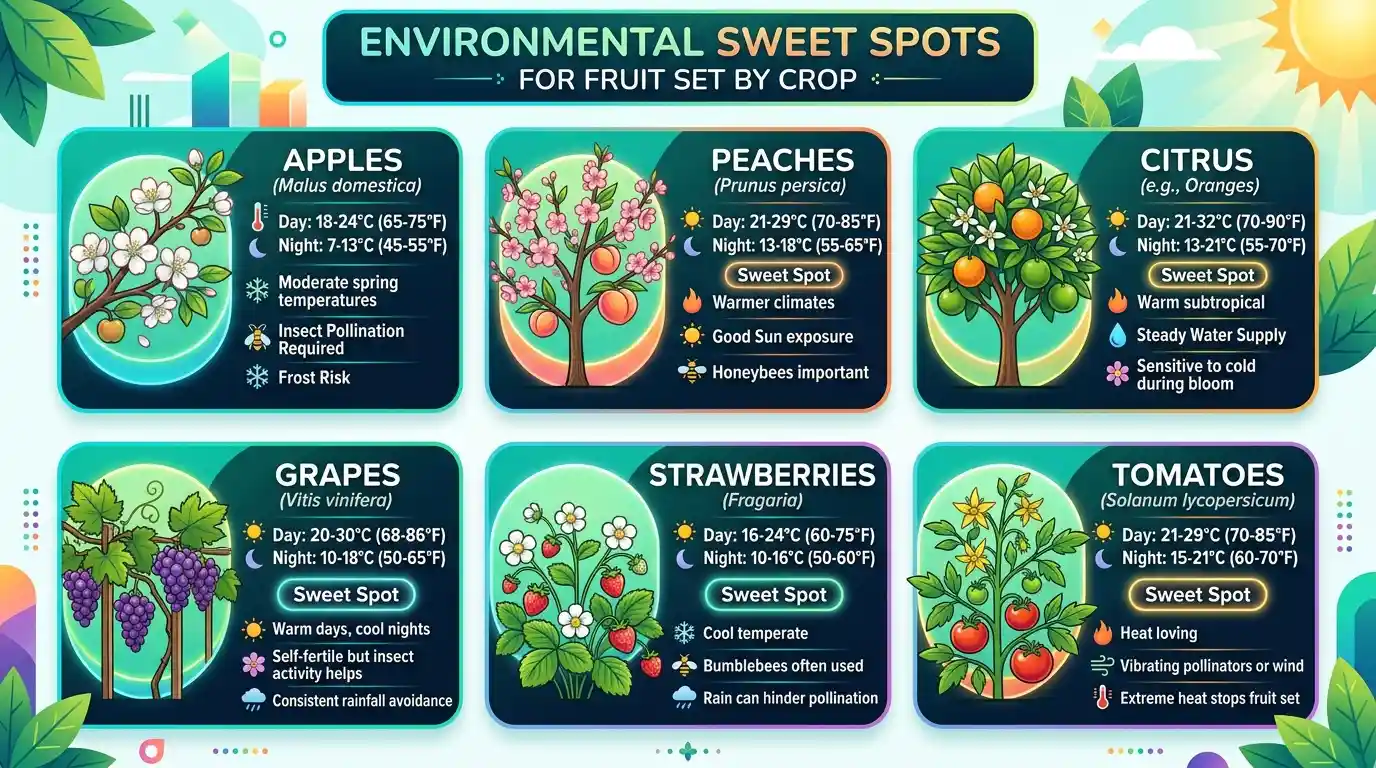
Temperature kills more fruit set than probably anything else. Each crop has a comfort zone. Go outside it and flowers abort.
Tomatoes are the poster child for this. Perfect fruit set happens between 70-85°F during the day and 60-70°F at night. Above 90°F during the day? Pollen starts dying. Above 75°F at night? Flowers drop.
I see this every summer in July and August. Everyone’s tomatoes are loaded with flowers but nothing’s setting. Too hot. Come September when it cools down a bit, suddenly fruit set comes back and people get a second flush of tomatoes.
Temperature sweet spots:
| Crop | Best Day Temp | Best Night Temp | Problem Point |
|---|---|---|---|
| Tomatoes | 70-85°F | 60-70°F | Over 90°F or under 55°F |
| Peppers | 75-85°F | 60-75°F | Over 95°F or under 60°F |
| Apples | 60-75°F | 45-60°F | Frost kills flowers |
| Citrus | 70-90°F | 55-70°F | Freeze damage |
| Strawberries | 60-80°F | 50-70°F | Over 85°F sustained |
Night temperature matters more than most people realize. Cool nights help plants recover and process what happened during the day.
What you can do:
Heat protection:
- Shade cloth (30-50% shade) during heat waves
- Misting systems to cool the air around plants
- Plant heat-tolerant varieties
- Mulch to keep roots cool
Cold protection:
- Row covers or frost blankets
- Plant near south-facing walls for warmth
- Cover fruit trees when frost threatens during bloom
- Choose cold-hardy varieties
A guy I know stretches shade cloth over his tomato bed every June. His neighbors think he’s crazy until August when his plants are still setting fruit and theirs have stopped.
Watering Strategies to Support Fruit Set
Plants hate surprises. Especially with water.
When they’re flowering and setting fruit, they need steady, consistent moisture. Dry them out and flowers drop. Drown them and flowers drop. Swing back and forth between wet and dry? Flowers definitely drop.
Best practices:
Water deep once or twice a week instead of shallow every day. Deep watering encourages deep roots. Shallow watering creates weak, surface roots that can’t handle stress.
How much: Enough that water reaches 8-12 inches deep in the soil. This might be an inch of water per week, more in sandy soil or heat, less in clay.
Use drip irrigation or soaker hoses if possible. These deliver water right to the root zone without wetting leaves (which can spread disease).
Mulch everything. A 2-3 inch layer of straw, wood chips, or shredded leaves keeps soil moisture even and temperatures stable.
During fruit set, increase watering a bit. The plant is working hard and needs more water. Once fruits are forming and growing, you can back off slightly. Some growers even reduce water as fruits ripen—it concentrates sugars and improves flavor.
Signs you’re messing up watering:
- Wilting during the day (too dry)
- Yellow leaves and slow growth (too wet or too dry)
- Flowers dropping (inconsistent moisture)
- Blossom end rot on tomatoes and peppers (calcium can’t move without steady water)
I put my finger in the soil every day. If it’s dry two inches down, I water. If it’s still moist, I wait. Simple but effective.
Light Requirements and Sunlight Optimization
Most fruiting plants are sun worshippers. They want 6-8 hours minimum of direct sun. More is better.
Not enough light? You get:
- Fewer flowers
- Flowers that don’t set fruit
- Weak, spindly growth
- Pest and disease problems
I’ve seen tomato plants growing in mostly shade. They might get tall, but they produce maybe one or two tomatoes all season. Same variety in full sun? Loaded.
How to maximize light:
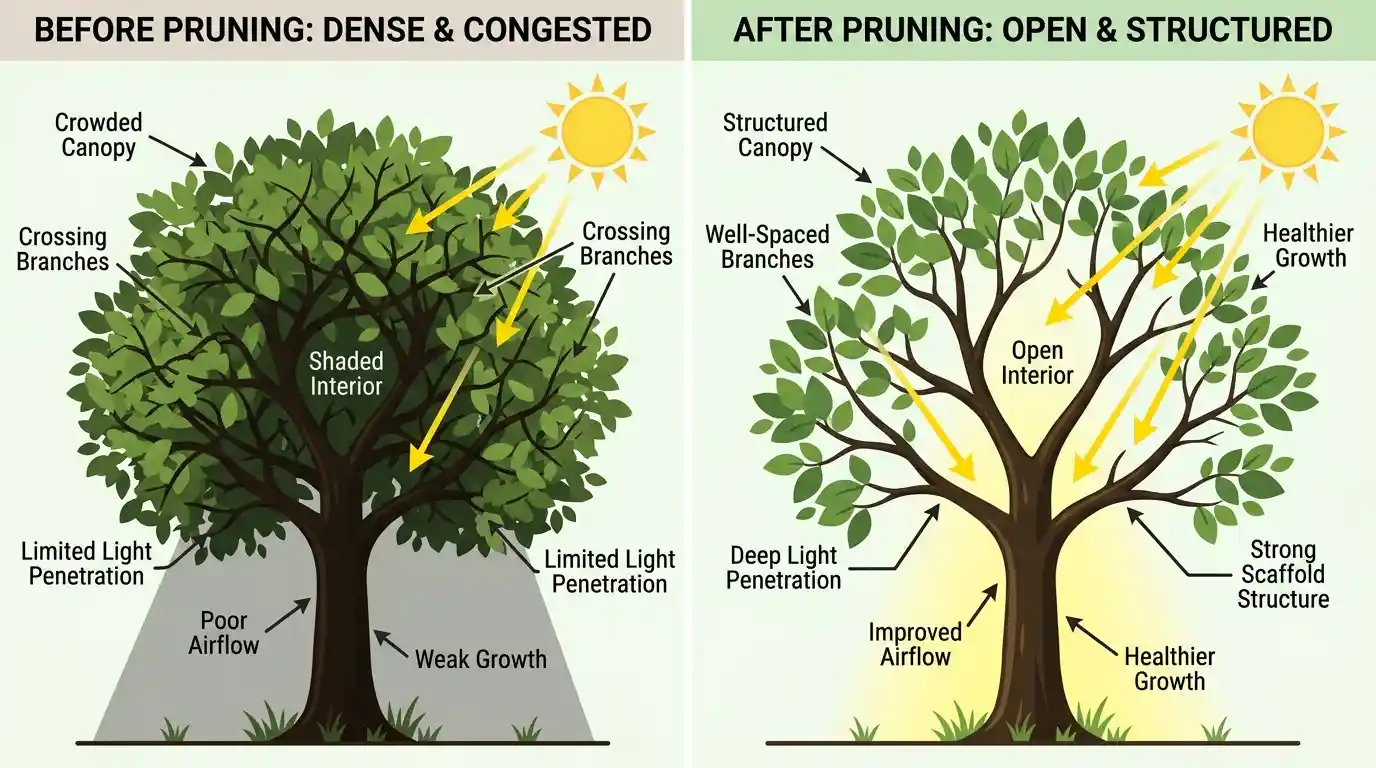
Prune to open the canopy. Remove some branches so light reaches inside the plant. Air flows better too, which reduces disease.
Remove competing plants. That nice big shrub might be shading your fruit trees. Weeds steal light from low-growing plants.
Position matters. Put your fruiting plants in the sunniest spots. Save shadier areas for lettuce and greens.
Train plants vertically. Tomatoes on stakes or trellises expose more leaves to light than plants sprawling on the ground.
Reflective mulches can bounce extra light up to lower leaves. Some commercial growers use reflective plastic mulch for this reason.
Fruit trees especially need pruning to let light penetrate. Shaded branches produce small, poor-quality fruit or none at all.
Protecting Blossoms from Wind and Weather
Wind does two bad things during flowering: it damages delicate flowers and it keeps pollinators away. Bees don’t fly much in strong wind.
Heavy rain washes pollen right off flowers. Late spring frost kills blossoms completely—one cold night can wipe out your entire fruit crop for the year.
Protection methods:
Plant hedges or put up fencing on the windward side of your garden. Even a 30% windbreak makes a huge difference.
Keep an eye on weather forecasts during bloom time. If frost is coming, cover plants overnight with sheets, blankets, or frost fabric. Even a spray of water can help (the ice that forms releases a tiny bit of heat that protects the flower inside).
Choose protected spots for tender crops. The south side of a building is warmer and more protected than an exposed field.
My peach tree sits near the house on the south side. My neighbor’s sits 50 feet away in the open. We usually bloom within days of each other. Some years we get a late frost. My tree, being closer to the house and more protected, often escapes damage while his loses most of its flowers.
Small things like this make a big difference in fruit set.
Prune and Train Plants for Maximum Fruit Production
How Pruning Affects Fruit Set
Pruning seems backward. You’re removing parts of the plant—how does that help?
But pruning directs energy. Every leaf, every branch, every flower takes energy to maintain. When you remove unnecessary branches, that energy redirects to the parts you want: flowers and fruit.
Pruning also:
- Opens the canopy so light reaches flowering areas
- Improves air flow (less disease)
- Removes diseased or damaged wood that drains resources
- Makes the plant structurally stronger to support heavy fruit
Timing matters though. Prune fruit trees in late winter while they’re dormant. Prune tomatoes and peppers during the growing season as needed.
Pruning Techniques for Different Plants
Fruit trees (apples, pears, peaches, plums):
Prune in late winter before buds break. You can see the structure clearly without leaves.
Remove:
- Dead or diseased branches first
- Branches that cross and rub each other
- Water sprouts (those straight-up shoots that don’t flower)
- Suckers from the base
- Crowded branches in the center
Goal: Create an open center or modified central leader shape. Light and air should reach all parts of the tree.
Tomatoes:
Remove lower leaves once the plant is established (reduces soil-borne disease).
For indeterminate varieties, some people remove suckers (shoots that grow between the main stem and branches). This focuses energy on fewer stems. I personally leave a few suckers to become extra fruiting stems but remove the rest.
Remove leaves shading flower clusters.
Peppers:
Usually need less pruning. Remove any branches touching the ground. Open the center a bit if it’s really crowded.
Berries:
Raspberries and blackberries: Cut canes to the ground after they fruit (they only fruit once). Thin remaining canes to the strongest 4-6 per plant.
Strawberries: Remove runners if you want bigger berries from the main plant.
Blueberries: In winter, remove old unproductive wood. Thin out twiggy growth. Keep strong, young canes.
A neighbor let his raspberry patch go wild for years. Hundreds of canes, tangled mess, mediocre berries. We spent one afternoon cutting out all the old canes and thinning to about five strong canes per foot. Next season his berry size doubled and picking was actually pleasant instead of a wrestling match.
Fruit Thinning — Less Is More
This is the hardest thing to get people to do. You wait all season for fruit to set. Then I tell you to remove half of them?
But thinning works. The plant only has so much energy. Trying to ripen 100 apples means they’ll all be small, and the branch might break. Thin to 50 apples and they’ll be twice the size, better flavor, and the tree stays healthy.
When to thin:
Wait until fruits are about marble-sized (a few weeks after fruit set). That way you’re not thinning fruits that would have dropped naturally anyway.
How much to thin:
Apples and pears: Leave one fruit every 6-8 inches. One per cluster is plenty.
Peaches and nectarines: One fruit every 4-6 inches.
Grapes: One cluster per shoot, remove the rest.
Tomatoes: Some people remove late-forming fruits at the end of season so energy goes to ripening existing fruits. I do this in fall when frost is coming.
How to thin:
Use small pruning shears or twist fruits gently off. Remove the smallest, damaged, or crowded fruits first.
| Fruit Type | Final Spacing | What to Keep |
|---|---|---|
| Apples | 6-8 inches apart | 1 per cluster |
| Peaches | 4-6 inches apart | Best fruits along branch |
| Pears | 4-6 inches apart | 1-2 per cluster |
| Grapes | 1 cluster per shoot | Healthiest clusters |
| Tomatoes | 4-6 per cluster | First-formed fruits |
I thin my peaches every year. The first time I did it, I felt guilty removing so many baby peaches. But harvest time? Those peaches were gorgeous—big, sweet, and the branches didn’t break like they had in previous years.
Training Systems to Support Fruiting
Training plants on supports helps fruit set in several ways:
- Better light exposure all around
- Better air flow
- Easier to tend and harvest
- Supports weight of heavy fruit
- Keeps fruit off the ground (less rot and pest damage)
Training methods:
Vertical trellising: Tomatoes, cucumbers, pole beans. Tie stems to stakes or strings as they grow.
Cages: Determinate tomatoes, peppers, eggplants. The plant grows up through the cage which supports it.
Espalier: Fruit trees trained flat against walls or fences. Maximizes light and looks beautiful. Takes patience but worth it.
Fan training: Peaches and cherries spread in a fan shape against a fence or wall.
Horizontal cordons: Grapes and berries trained along horizontal wires.
I espalier a couple apple trees along my back fence. They take up maybe 18 inches of space but produce loads of apples. Every branch gets full sun. Every apple is easy to reach. And it looks amazing.
Select the Right Varieties for Your Climate
Why Variety Selection Matters
You can do everything right—perfect soil, perfect watering, perfect pruning—and still get poor fruit set if you’re growing the wrong variety for your area.
Some varieties just won’t set fruit in heat. Others need cold winters. Some resist diseases common in your area. Others are sitting ducks.
When you choose varieties bred for your specific conditions, fruit set problems often disappear.
Heat-Tolerant Varieties for Hot Climates
Standard tomato varieties stop setting fruit above 90°F. If you live where summer means weeks above 90°F, you need heat-set varieties.
These varieties were bred to set fruit even when temperatures spike. Their pollen stays viable at higher temperatures. Their flowers don’t abort as easily.
Heat-set tomatoes:
- ‘Phoenix’
- ‘Heatwave II’
- ‘Surefire’
- ‘Heat Master’
- ‘Summerset’
- Cherry tomatoes in general handle heat better than big slicers
Heat-tolerant peppers:
- ‘Grande’ (jalapeño)
- Most hot peppers naturally tolerate heat better than sweet peppers
Other heat-loving crops:
- Beans: ‘Provider’, ‘Contender’
- Squash: ‘Tromboncino’ (keeps setting fruit in heat when other squash quit)
A friend in Texas switched to ‘Phoenix’ tomatoes. She went from maybe 20 tomatoes per plant to over 60, in the same heat that used to shut down her old varieties.
Cold-Hardy and Short-Season Varieties
Northern growers face the opposite problem. Short growing season means you need varieties that:
- Set fruit in cooler temperatures
- Mature quickly from flower to harvest
- Tolerate cool nights
Cold-tolerant choices:
Tomatoes: ‘Early Girl’, ‘Stupice’, ‘Sub Arctic Plenty’
Apples: ‘Honeycrisp’, ‘Haralson’ (need winter cold, handle spring frost better)
Strawberries: June-bearing varieties selected for northern climates
Blueberries: Northern highbush varieties (need winter chill)
These varieties were selected over years specifically to perform in shorter, cooler seasons.
Disease-Resistant Varieties Improve Fruit Set
Sick plants don’t set fruit well. They’re stressed, weak, and focused on survival rather than reproduction.
Plant disease-resistant varieties and you remove a major source of stress. The plant stays healthy and productive.
Look for these codes on tomato varieties:
- V: Verticillium wilt resistance
- F: Fusarium wilt resistance
- N: Nematode resistance
- T: Tobacco mosaic virus resistance
Disease-resistant favorites:
Tomatoes: ‘Mountain Merit’, ‘Defiant’, ‘Iron Lady’ (all have multiple disease resistances)
Apples: ‘Enterprise’, ‘Liberty’, ‘Freedom’ (resistant to apple scab, a common problem)
Grapes: ‘Marquis’, ‘Frontenac’ (resist many common grape diseases)
I grow mostly disease-resistant tomatoes now. I used to lose plants every year to wilts. Now they stay healthy and productive all season. Better fruit set, bigger harvest, less stress.
Manage Pests and Diseases That Affect Fruit Set
Common Pests That Reduce Fruit Set
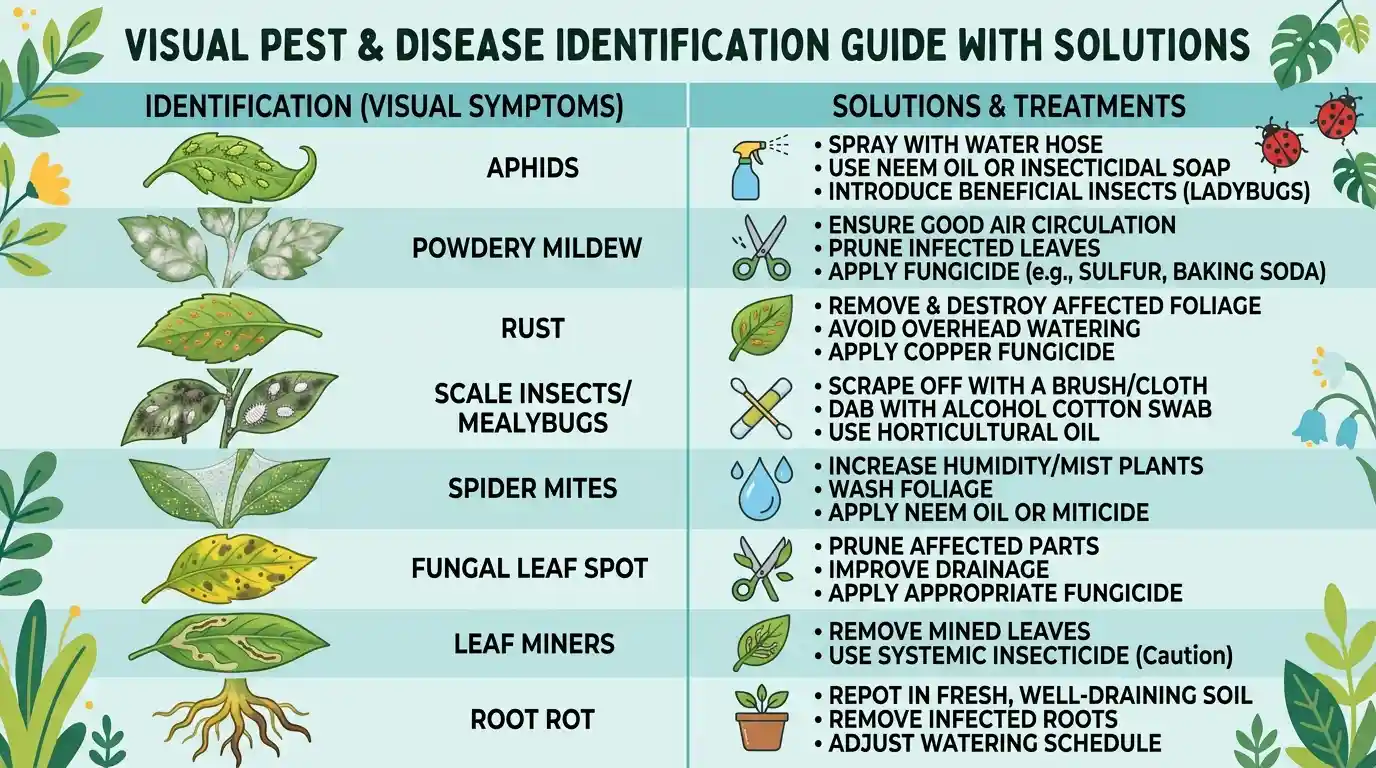
Bugs that damage flowers directly or stress the plant during flowering can crash your fruit set.
Aphids cluster on new growth and flower buds, sucking sap and spreading viruses.
Thrips are tiny but destructive. They damage flower tissues and can prevent pollination.
Whiteflies weaken plants and spread diseases.
Blossom beetles literally eat flower parts.
Spider mites stress plants during the critical fruit set period.
How to deal with them:
Check plants regularly. Catch pests early before populations explode.
Encourage beneficial insects. Ladybugs, lacewings, and parasitic wasps eat common pests. Plant flowers to attract them.
Physical barriers. Row covers during flowering keep pests off. Remove covers during the day if you need pollinators.
Organic sprays. Neem oil and insecticidal soap work on soft-bodied insects. Apply in evening to avoid harming bees.
Never spray pesticides during flowering. You’ll kill pollinators and destroy your fruit set.
I let a few aphids and other pests hang around because they attract predatory insects. Once ladybugs and lacewings move in, they handle the pest problem for me. It’s a balance.
Diseases That Cause Flower and Fruit Drop
Fungal diseases love humid, wet conditions. They attack flowers, young fruits, and weaken the whole plant.
Botrytis (gray mold) attacks flowers and young fruits. You’ll see fuzzy gray growth. Flowers rot and fall off.
Anthracnose causes fruit drop in beans, tomatoes, peppers, and fruit trees.
Brown rot devastates stone fruits (peaches, plums, cherries). Flowers and young fruits turn brown and shrivel.
Powdery mildew coats leaves in white powder. The plant gets stressed and fruit set drops.
Bacterial diseases like bacterial spot and fire blight can kill flowers and developing fruits.
Viral diseases stunt plants and reduce flowering. They spread through insects and infected tools.
Prevention:
Space plants properly. Good air circulation helps prevent fungal diseases.
Water at soil level. Wet leaves spread disease.
Remove infected plant parts immediately. Don’t compost them.
Rotate crops. Don’t plant tomatoes in the same spot year after year.
Choose resistant varieties.
Apply preventive sprays if needed. Organic copper and sulfur can prevent some fungal diseases. Apply before you see problems, following label directions.
I lost a whole planting of beans to anthracnose one year. Flowers would form, tiny beans would start, then turn brown and drop. By the time I figured out what it was, too late. The next year I planted resistant varieties and had zero problems.
Physiological Disorders Affecting Fruit Set
Not every problem is a bug or disease. Sometimes it’s the growing conditions.
Blossom end rot on tomatoes and peppers looks like disease but it’s actually a calcium problem made worse by inconsistent watering.
Catfacing (lumpy, deformed tomatoes) happens when flowers form during cool weather.
Fruit cracking comes from irregular watering—the inside grows faster than the skin can handle.
Sunscald happens when fruits get too much direct sun without enough leaf cover.
Solutions:
Maintain consistent soil moisture (prevents blossom end rot and cracking).
Make sure calcium is available in soil (lime if pH is too low).
Protect young fruits from extreme weather.
Don’t over-prune—leave some leaves to shade developing fruits.
These problems look scary but they’re usually easy to prevent once you know what’s causing them.
Crop-Specific Tips for Improving Fruit Set
Tomatoes — Maximizing Fruit Set
Tomatoes are what most home growers obsess over. Here’s what actually works:
Temperature is everything. Best fruit set happens at 70-85°F days and 60-70°F nights. Outside that range, fruit set drops fast.
Vibration helps. Tomatoes self-pollinate but shaking helps. Wind works. Bumble bees work great. You can gently shake plants every day or tap flower stems with your finger.
Use blossom-set spray during heat waves. When it’s too hot for normal fruit set, spray helps.
Consistent water. No wet/dry swings. Mulch helps.
Don’t overfeed nitrogen. Too much nitrogen makes huge plants with few flowers. Switch to bloom fertilizer when flowering starts.
Troubleshooting:
- Lots of flowers, no fruit → temperature stress or pollination problem
- Fruits start then drop → watering issues or nutrient deficiency
- Huge plant, few flowers → too much nitrogen
I shake my tomato plants every morning when I water. Takes five seconds per plant. My fruit set rate is consistently above 70%.
Peppers — Boosting Production
Peppers are similar to tomatoes but even more temperature-sensitive at night.
Night temperatures above 75°F? Fruit set crashes. Use shade cloth to cool things down.
Remove first flowers. This sounds wrong but it works. The first few flowers appear before the plant is strong enough to support fruit. Pinch them off. The plant puts that energy into getting bigger and stronger. A few weeks later it’ll flower like crazy and actually set fruit.
Calcium helps. Peppers love calcium. Side-dress with gypsum or spray with calcium solution.
Moderate nitrogen, higher phosphorus. Same as tomatoes.
Bell peppers vs. hot peppers: Bells are fussier about temperature. Hot peppers generally set fruit more easily and handle heat better.
I started removing early pepper flowers a few years ago and my pepper harvests probably tripled. Bigger, stronger plants set way more fruit than small plants struggling to support their first pepper.
Fruit Trees (Apples, Pears, Stone Fruits)
Fruit trees are a long game. You plant them, wait years for first bloom, and then you’d better get fruit set right.
Cross-pollination: Most apples, pears, sweet cherries, and plums need a compatible partner variety nearby. Check before you buy.
Prune in winter. Open up the canopy. Remove crossing branches and dead wood.
Thin fruit. This is absolutely necessary for tree health and good fruit. One apple every 6-8 inches.
Boron is critical for apples and pears. Spray or apply to soil before flowering.
Chill hours matter. Many fruit trees need a certain amount of winter cold to flower and fruit properly. If you live where winters are warm, choose low-chill varieties.
Protect from late frost. One frosty night during bloom can destroy your entire year’s crop. Cover trees if frost threatens. Run sprinklers (the ice protects flowers). Pray.
Manage biennial bearing by thinning heavily in “on” years. This prevents the tree from exhausting itself and skipping the next year.
My neighbor’s apple tree used to produce heavily one year, nothing the next. He started thinning aggressively in heavy years. Now he gets moderate crops every single year. Way better than feast or famine.
Berries (Strawberries, Blueberries, Raspberries)
Strawberries:
Remove runners if you want bigger berries. Runners steal energy from fruit production.
Protect from late frost. Row covers work great.
Keep soil consistently moist during flowering and fruit set.
Blueberries:
Soil pH is critical. Blueberries need acidic soil (pH 4.5-5.5). Wrong pH and they can’t absorb nutrients. Fruit set crashes.
Plant at least two varieties for cross-pollination.
Mulch heavily with acidic mulch (pine needles, wood chips).
Prune out old wood every few years.
Raspberries and blackberries:
Cut fruited canes to ground after harvest. They won’t fruit again.
Thin remaining canes to 4-6 of the strongest.
Support canes on wires or trellis.
Keep consistently watered during fruit set.
I planted blueberries before I understood the pH thing. They barely grew, almost never flowered. Finally tested soil—pH was 7.2. Added sulfur to lower it to 5.0. The next year those same plants exploded with flowers and berries. Same plants, just fixed the pH.
Vine Crops (Cucumbers, Squash, Melons)
Vine crops have separate male and female flowers. This confuses people.
Male flowers appear first. They have a thin stem. They don’t make fruit. They make pollen.
Female flowers have a tiny fruit at the base. This is what swells into a cucumber or squash.
For fruit to form, pollen from male flowers must reach female flowers. Usually bees do this. But if bees are scarce, hand pollinate:
Pick a male flower (or use a brush to collect pollen from it). Brush the pollen onto the center of female flowers. Do this in the morning.
Early flowers often don’t set. This is normal. The plant drops them. As the plant gets bigger and stronger, fruit set improves.
Heat stress causes fruit abortion in squash and melons. Keep plants well-watered.
Lack of pollinators is the number one reason for poor fruit set in vine crops. Plant flowers nearby. Hand pollinate if needed.
I grow zucchini and squash every year. Early summer they bloom like crazy but nothing sets. I used to think I was doing something wrong. Then I learned this is normal—the plant is still establishing. By mid-summer, once both male and female flowers are blooming at the same time and bees are active, fruit set goes crazy. Suddenly I have more zucchini than I know what to do with.
Final Thoughts
Improving fruit set isn’t about one magic trick. It’s about understanding what your plants need during that critical window when flowers become fruit.
Good pollination. Proper nutrition. Stable temperatures and moisture. Healthy plants free from major pests and diseases. The right variety for your conditions.
Get most of these right and your fruit set will improve. Get all of them right and you’ll be overwhelmed with harvest.
Start with pollination—make sure it’s actually happening. Then look at your environment and nutrition. Choose good varieties. Manage problems before they get out of control.
And remember Tom from the beginning of this article? After we talked through his tomato situation, he realized two things: his plants were too high in nitrogen (beautiful leaves, few flowers), and temperatures had been in the mid-90s for two weeks straight.
He switched fertilizers and put up shade cloth. Within three weeks, his plants were setting fruit. By season’s end, he had more tomatoes than he’d ever grown before.
“I was so focused on making the plants grow,” he told me, “I forgot that the goal was fruit, not just leaves.”
That’s the whole thing in one sentence. Grow the plant, yes. But create conditions where fruit set can actually happen. Do that and your harvest takes care of itself.