
Last spring, a woman named Diana posted in a local gardening group I follow. She’d planted a beautiful grafted mango tree in her backyard two years earlier. It grew well the first year. Then the rainy season came. Within six weeks, the leaves turned yellow, the trunk went soft near the base, and the tree was dead.
The problem wasn’t the tree. It wasn’t pests. It wasn’t the weather. It was the soil.
Diana had planted her mango in a low spot in her yard where clay soil held water like a bowl. The roots sat in soggy ground after every rain. Root rot took over, and by the time she noticed something was wrong, it was too late.
I’ve heard versions of this story dozens of times. And it almost always comes back to the same thing — the wrong soil for a mango tree. Getting the soil right isn’t complicated, but it does matter more than most people think. Let me walk you through everything you need to know.
Why Soil Matters More Than You Think for Mango Trees
The Role of Soil in Mango Tree Health
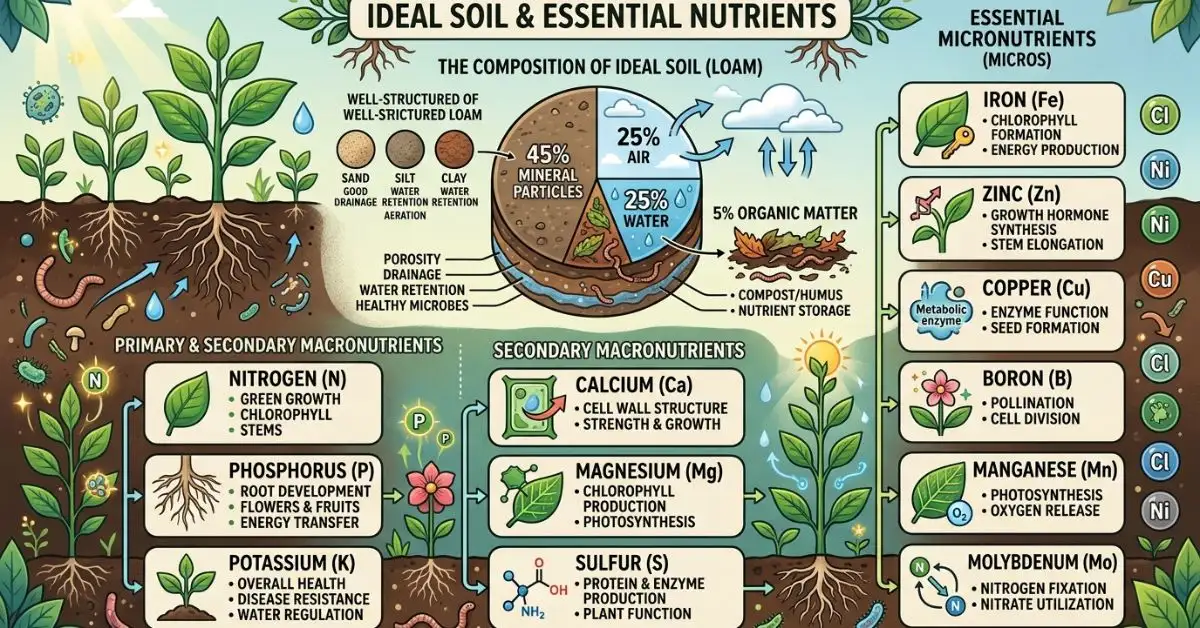
Soil isn’t just dirt your mango tree sits in. It’s the system that feeds it. It delivers water, oxygen, and nutrients to the roots. It supports the microbes and fungi that help roots absorb what they need. The quality of your soil directly affects how much fruit you get, how the fruit tastes, and how long your tree lives.
Here’s something that surprises most people: a mature mango tree can send roots 6 to 8 feet deep. The root spread can be even wider than the canopy above ground. That’s a lot of soil your tree depends on.
What Happens When You Use the Wrong Soil
This is where things go sideways fast.
- Waterlogged soil causes root rot. A fungus called Phytophthora thrives in wet conditions and can kill a mango tree in weeks. According to the University of Florida IFAS, root rot from poor drainage is the number one killer of mango trees in home landscapes.
- Soil that’s too sandy drains so fast that water and nutrients wash right through before roots can grab them. Your tree ends up thirsty and hungry.
- Wrong pH locks nutrients out. Iron, manganese, and zinc become unavailable to the tree even if they’re present in the soil.
- Compacted soil squeezes out air. Roots can’t breathe, can’t grow, and the tree slowly suffers.
What Soil Do Mango Trees Grow In Naturally?
Mangoes come from South Asia — India and Myanmar — where they’ve grown wild for thousands of years. In nature, they grow in deep, well-drained sandy loam soil. You often find them on hillsides and elevated ground where water flows away instead of pooling.
They’re adapted to a cycle of wet and dry. Monsoon rains soak the ground, then the dry season gives roots a break. That pattern is the key to understanding what soil for mango tree growing should look like: it needs to drain well and not stay wet.
Ideal Soil Type for Mango Trees
Sandy Loam — The Gold Standard
If you ask any horticulturist what the best soil for mango trees is, the answer is sandy loam. It’s a mix of about 60% sand, 30% silt, and 10% clay. This combination drains well, holds enough moisture for roots to drink, stays loose for root growth, and lets air flow through.
If you happen to have sandy loam in your yard, you’re already ahead of the game.
Can Mango Trees Grow in Clay Soil?
They can, but only if you do a lot of work first. Clay holds too much water and compacts too easily. Roots can’t spread and they can’t breathe.
If clay is what you’ve got, here’s what to do:
- Mix in coarse sand, perlite, and compost to loosen things up.
- Build a raised mound 12 to 18 inches above grade and plant into that.
- Add drainage channels to move water away from the root zone.
One thing I’ll say plainly: never plant a mango tree straight into un-amended heavy clay. That’s how you end up like Diana.
Can Mango Trees Grow in Sandy Soil?
Pure sand drains too fast. Nutrients wash away before the tree can use them. But sandy soil is still much easier to fix than clay. Just mix in compost, aged manure, and some coco coir to help hold moisture and nutrients.
Can Mango Trees Grow in Loam?
Yes — loam is great for mango trees, especially when it leans toward the sandy side. It’s naturally rich in organic matter with a good balance of drainage and moisture. If your soil is naturally loamy, you may only need to add a bit of perlite if drainage feels slow.
Soil Types to Avoid
Stay away from un-amended heavy clay, hardpan soil with a dense layer underneath, waterlogged or marshy areas, highly alkaline soil above pH 8.0, and salty soil. Mango trees are moderately sensitive to salt, which matters if you’re growing near the coast.
| Soil Type | Drainage | Nutrient Retention | Suitability | Amendment Needed? |
|---|---|---|---|---|
| Sandy Loam | Excellent | Good | Best | Minimal |
| Loam | Good | Very Good | Excellent | Minimal |
| Sandy | Very Fast | Poor | Acceptable | Moderate |
| Silt Loam | Moderate | Good | Okay with care | Moderate |
| Clay Loam | Slow | High | Risky | Heavy |
| Heavy Clay | Very Poor | Too High | Avoid | Major rework |
Ideal Soil pH for Mango Trees
The Sweet Spot: pH 6.0 to 6.5
Mango trees prefer slightly acidic to neutral soil. They’ll tolerate a range of 5.5 to 7.5, but the best results come from soil between 6.0 and 6.5. At that range, all the nutrients your tree needs — nitrogen, phosphorus, potassium, iron, zinc, manganese — are available for root uptake.
When pH drifts too high (above 7.5), you’ll see iron chlorosis — leaves turn yellow with green veins. It’s one of the most common problems I hear about from growers in areas with alkaline well water. When pH drops too low (below 5.0), aluminum and manganese become toxic and calcium runs short.
How to Test and Adjust pH
Test your soil before you plant. You can use a home test kit from a garden center for about $10, a digital pH meter for $15 to $30, or send a sample to your local Cooperative Extension Service for the most accurate reading.
If your soil is too acidic, add dolomitic lime to raise the pH. If it’s too alkaline, work in elemental sulfur or acidifying organic matter like peat moss and pine bark. Go slow — big pH swings stress trees. Test again after 30 days.
Pro tip: Test your irrigation water too. Alkaline well water is a hidden culprit that slowly raises soil pH over time.
Drainage — The Non-Negotiable Requirement
I can’t say this enough: mango trees need excellent drainage. Their roots cannot sit in water for more than 24 to 48 hours without damage. Waterlogged soil cuts off oxygen, creates conditions for Phytophthora root rot, and can kill even a healthy tree fast. Research from ICAR shows mango tree death rates jump by 60 to 80 percent in poorly drained soil.
The Percolation Test
Before you plant, test your drainage. It takes 30 minutes and could save your tree.
- Dig a hole 12 inches wide and 12 inches deep.
- Fill it with water. Let it drain completely.
- Fill it again right away.
- Time how long the second fill takes to drain.
If it drains in 1 to 6 hours, you’re good. Under 1 hour means it’s too fast — add organic matter. Over 6 hours means it’s too slow — you need to amend the soil or plant on a raised mound.
Signs of a Drainage Problem
Watch for these red flags: yellowing lower leaves, wilting even though the soil feels wet, mushy or dark roots, fungal growth at the trunk base, and standing water around the tree after rain. If you see any of these, act fast.
Best Soil Mix for Mango Trees in Pots
A lot of people grow mango trees in containers — especially folks in cooler areas who need to move trees indoors during winter. Container soil is different from ground soil. Regular garden soil is too heavy for pots. It compacts, chokes roots, and drains poorly.
Here are three soil mixes that work well:
Recipe #1 — Standard Mix (Good for Beginners)
- 40% potting soil (peat or coco coir based)
- 30% perlite or pumice
- 20% coarse sand
- 10% aged compost or worm castings
Recipe #2 — Premium Tropical Mix
- 30% pine bark fines
- 25% coco coir
- 25% perlite
- 10% coarse sand
- 10% worm castings
- A handful of horticultural charcoal
Recipe #3 — Budget Mix
- 50% standard potting mix
- 30% perlite
- 20% coarse sand
- Add slow-release fertilizer at planting
| Mix | Cost | Drainage | Best For |
|---|---|---|---|
| Standard | $$ | Very Good | Beginners |
| Premium | $$$ | Excellent | Serious growers |
| Budget | $ | Good | Young trees, small pots |
Start young trees in 10 to 15 gallon pots. Move up to 25 to 50 gallons as the tree grows. Fabric grow bags work great because they drain well and air-prune roots. Repot young mango trees every 1 to 2 years and refresh the top few inches of soil each spring for mature trees.
Soil Preparation for In-Ground Planting
If you’re planting a mango tree directly in the ground, here’s the process:
- Pick a full-sun spot on higher ground, away from buildings.
- Test your soil pH and do the percolation test.
- Dig a hole 3 times wider than the root ball and the same depth.
- Mix the excavated soil: 70% native soil, 20% aged compost, 10% perlite or coarse sand. Adjust pH if needed.
- Create a slight mound so the root crown sits 2 to 3 inches above the surrounding ground.
- Backfill, water deeply, and spread 3 to 4 inches of mulch. Keep mulch at least 6 inches from the trunk.
In areas with heavy soil, a high water table, or flood risk, the raised mound method is your best friend. Build a mound 18 to 24 inches high and 4 to 6 feet across. Fill it with your amended soil mix. This is how growers in South Florida, coastal India, and Southeast Asia handle tough planting conditions. It works.
What NOT to do: Don’t dig a narrow deep hole — it traps water like a bathtub. Don’t bury the root crown below soil level. Don’t use fresh manure — it burns roots. And don’t pile mulch against the trunk. That “volcano mulching” thing causes rot.
Keeping Your Soil Healthy Long-Term
Getting the soil right at planting is only half the job. You need to maintain it.
Fertilizing: Young trees (1 to 3 years) do well with a balanced 6-6-6 fertilizer every 6 to 8 weeks during the growing season. Once your tree starts fruiting, switch to a low-nitrogen, high-potassium formula like 8-3-9. But here’s the thing — fertilizer only works if your pH is right. At the wrong pH, nutrients get locked in the soil no matter how much you apply.
Mulching: Keep a 3 to 4 inch layer of wood chips, shredded bark, or dried leaves over the root zone. Mulch holds moisture, keeps soil temperature steady, blocks weeds, and breaks down into food for the soil over time.
Soil biology: Mango trees form partnerships with mycorrhizal fungi in the soil. These fungi extend the reach of the root system and help the tree absorb nutrients more efficiently. Add a mycorrhizal inoculant when you plant. Use compost and worm castings to feed the microbial life in your soil. Go easy on synthetic fertilizer — too much can suppress the beneficial organisms you want.
Annual Soil Care Calendar
| Season | What to Do |
|---|---|
| Early Spring | Test pH, amend if needed, first fertilizer application, refresh mulch |
| Late Spring / Summer | Monitor moisture, fertilize every 6–8 weeks (young trees), check drainage during heavy rain |
| Fall | Last fertilizer application, add compost top-dressing |
| Winter | Maintain mulch for root insulation, cut back on watering, skip fertilizer |
Get the Soil Right and the Tree Takes Care of the Rest
A grower I talk to in South Florida once told me, “I’ve killed more mango trees with bad soil than bad weather ever did.” That stuck with me.
The good news is this: once you set up the right soil for your mango tree — good drainage, proper pH, the right texture — the tree does most of the work from there. Mangoes are tough, resilient trees. They just need a solid foundation.
Take the time to test your soil. Amend it if you need to. Build that mound if your yard stays wet. Choose the right pot mix if you’re growing in containers. These small steps up front save you from heartbreak later — and get you one step closer to picking ripe mangoes from your own tree.