
The first time I saw a lotus bloom in person, I understood why entire religions formed around this plant.
It was at a botanical garden in St. Louis. Mid-July. Hot as blazes. And there were these massive pink flowers rising above leaves the size of dinner plates, floating on water that should have been too murky for anything to grow. One of the volunteers told me the lotus bed had been there for forty years. Same rhizomes, just spreading and blooming every summer like clockwork.
I went home and ordered my first Nelumbo nucifera tuber that same week.
Killed it within three months.
Took me two more tries before I got one to survive a full year. Now I have a stock tank pond on my patio with lotus blooming every August, and neighbors stop by just to look at it. Worth every failure to get here.
If you’re thinking about growing sacred lotus—or you tried and failed like I did—this guide covers what actually works.
Quick Guide: Sacred Lotus (Nelumbo nucifera)
| Feature | Requirement / Fact |
| Sunlight | Full Sun (6–8+ hours) |
| USDA Zones | 4–10 (needs winter protection in 4–6) |
| Water Type | Still water (no fountains or movement) |
| Best Starter Variety | Dwarf varieties (e.g., ‘Momo Botan’) |
| Planting Source | Tubers (Rhizomes) are easier for beginners |
| Edible Parts | Rhizome (Root), Seeds, Leaves, Flowers |
What Is Nelumbo Nucifera?
Nelumbo nucifera, commonly known as sacred lotus or Indian lotus, is an aquatic perennial plant native to Asia and Australia. It features:
- Medicinal properties used for centuries
- Large circular leaves (up to 24 inches)
- Stunning pink or white flowers
- Edible rhizomes (lotus root) and seeds
- Deep cultural and spiritual significance
It’s not a water lily, though people confuse them constantly.
Water lilies (Nymphaea species) float their leaves on the water surface. Lotus leaves rise above the water on tall stems, sometimes three feet high. Completely different plant families. Different care requirements. Different everything.
Lotus belongs to the family Nelumbonaceae. Only two species exist in the whole genus: Nelumbo nucifera (from Asia and Australia) and Nelumbo lutea (the American lotus, native to North America). That’s it. Two species. Everything else is a cultivar or hybrid.
What does Sacred Lotus Looks Like
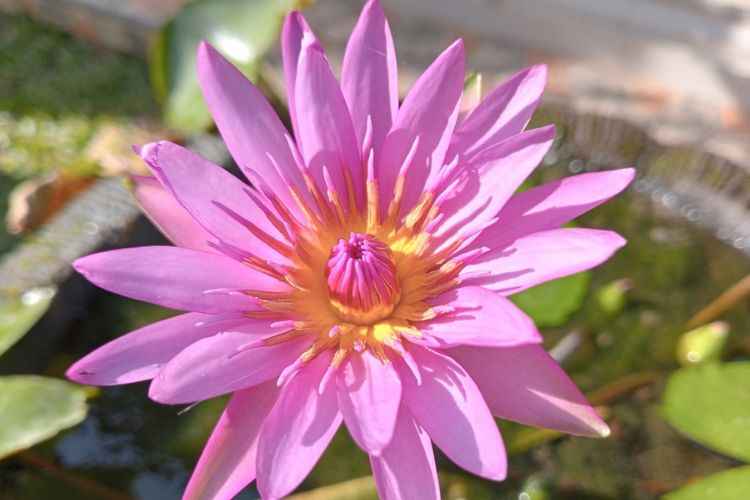
The leaves are the first thing you notice. Round, blue-green, with a waxy coating that makes water bead up and roll off. Scientists call this the “lotus effect”—the surface is so water-repellent that dirt can’t stick. Rain literally cleans the leaves. Researchers have copied this property for self-cleaning paints and fabrics.
Flowers come in pink, white, yellow, and deep rose-red depending on variety. They’re huge—some varieties produce blooms over 12 inches across. Each flower opens in the morning and closes at night for about three days, then the petals drop. What’s left behind is a shower-head-shaped seed pod that eventually turns brown and releases seeds.
Below the water sits the rhizome—what most people call lotus root. This thick, tuberous stem runs horizontally through the mud, storing nutrients. It’s the edible part you find sliced in Asian grocery stores.
Remarkable Biology
Lotus does things most plants can’t.
Seeds that live forever. Well, not forever, but close. In 1995, scientists germinated lotus seeds from a dry lakebed in China’s Liaoning Province. Those seeds were over 1,300 years old. Still viable. Still grew into healthy plants. That’s the longest seed longevity ever documented.
Self-heating flowers. Lotus flowers generate heat. They can maintain temperatures of 86-95°F even when air temperatures drop below 50°F. Scientists think this helps attract pollinators and spread scent. Very few plants can regulate their own temperature like this.
Leaves that clean themselves. That water-repellent surface isn’t just pretty. It’s a pest and disease defense mechanism. Nothing sticks to the leaves. Nothing grows on them. They stay pristine all season.
Growing Nelumbo Nucifera: What Actually Works
Lotus grows in USDA zones 4 through 10. That covers most of the continental United States. If you can grow it, you probably should. Here’s how.
Light Requirements
This plant need full sun, minimum six hours daily. More is better. Eight hours is ideal. Lotus won’t bloom in shade. It might survive, but you’ll get leaves and nothing else.
I’ve seen lotus grown in partial shade. The plants were leggy and sad. No flowers. Just a few leaves reaching desperately toward whatever light they could find.
Water Depth
This is where people mess up.
Lotus needs still water. No fountains, no moving water, no waterfalls nearby. The rhizomes sit in soil at the bottom of the pond or container. The water above them should be 2-4 inches over the soil surface for new plantings. Established plants can handle 6-12 inches of water depth.
Too deep and the leaves can’t reach the surface. Too shallow and the roots dry out or overheat.
Container growing is actually easier for beginners. A half-whiskey barrel works. So does a large plastic stock tank. Those big black nursery pots set inside a larger water-holding container work too.
Choosing Your Variety
Size matters more than color when you’re starting out.
Dwarf varieties like ‘Momo Botan’ or ‘Baby Doll’ grow 2-4 feet tall. Perfect for containers and small spaces. The flowers are smaller but just as pretty.
Medium varieties like ‘Mrs. Perry D. Slocum’ or ‘Carolina Queen’ need more room. Think half-barrel minimum, small pond ideal.
Large varieties like ‘The President’ can grow 5-6 feet tall with leaves over 2 feet across. These need actual ponds. Don’t try to cram them into containers.
Start with a dwarf variety. Learn how the plant grows. Then go bigger if you want.
Planting Method
You can start from seeds or tubers (rhizomes). I recommend tubers for beginners.
Seeds are cheap and fun but take 2-3 years to produce flowers. Tubers are more expensive but often bloom the first or second season. Worth the investment when you’re learning.
Planting a tuber:
- Use heavy garden soil or clay-based pond planting mix. Not potting soil. Not peat. Those float.
- Fill your container about halfway with soil.
- Lay the tuber horizontally on the soil surface. The growing tip should point slightly upward. Don’t bury it completely—just press it gently into the soil so it stays in place.
- Add a thin layer of gravel or small stones on top to keep the soil from clouding the water.
- Lower the container into your pond or water garden. Start with 2-3 inches of water over the soil.
- Wait. New leaves take 2-4 weeks to emerge in warm weather.
Seasonal Care
Spring: This is when lotus wakes up. Once water temperatures stay above 60°F, new leaves start emerging. Begin fertilizing when you see the first floating leaves. Use aquatic plant fertilizer tablets pushed into the soil—once monthly during the growing season.
Summer: Peak growth and blooming. Keep water levels consistent. Fertilize monthly. Remove spent flowers if you don’t want seed pods. Yellow leaves can be trimmed at the water line.
Fall: As temperatures drop, the leaves yellow and die back. Stop fertilizing. Let the plant go dormant naturally.
Winter: The rhizomes need protection from hard freezing. In zones 7-10, leave them in the pond—the water insulates them. In zones 4-6, either move containers to an unheated garage, sink them deeper in the pond (at least 12-18 inches of water over the soil), or mulch heavily with straw if the pond is shallow.
I lost my first lotus by letting the container freeze solid. The rhizomes turned to mush. Don’t make that mistake.
When Things Go Wrong
No Flowers
Most common complaint. Usually means:
- Not enough sun (needs 6+ hours)
- Not enough fertilizer (monthly during growing season)
- Water too deep (start shallow)
- Plant too young (tubers may take 1-2 years to establish before blooming)
Yellow Leaves
Some yellowing is normal as old leaves die back. If new leaves yellow, check for:
- Nutrient deficiency (fertilize more)
- Water too cold (wait for warmer weather)
- Root rot (check the rhizome—should be firm, not mushy)
Aphids
They love lotus. Blast them off with a hose. Or add some beneficial insects. Fish in your pond will eat aphids that fall in the water.
Eating Your Lotus
Every part of Nelumbo nucifera is edible. The rhizome (lotus root) is the most common culinary part in the West.
Lotus Root
Those sliced rounds with the pretty hole pattern. Mild, slightly sweet, crunchy texture that holds up to cooking. High in fiber, vitamin C, potassium, and copper.
Preparation is simple: peel, slice, and soak in water with a splash of vinegar to prevent browning. Then stir-fry, deep fry into chips, add to soups, or pickle.
My favorite is stir-fried lotus root with garlic and soy sauce. Takes about 10 minutes. The crunch stays even after cooking.
Lotus Seeds
Fresh seeds taste like slightly sweet chestnuts. Dried seeds need soaking before use. Common in Asian desserts—lotus seed paste fills mooncakes. Also used in savory soups and congee.
The green embryo inside each seed is bitter. Many recipes say to remove it. Traditional Chinese medicine uses these bitter embryos differently—dried as a tea for calming effects.
The Medicine Side
Traditional medicine systems have used lotus for thousands of years. Ayurveda in India, Traditional Chinese Medicine, ancient Egyptian healing practices.
Modern research shows some interesting compounds:
Nuciferine – an alkaloid found in the leaves. Studies suggest it may help with blood sugar regulation and weight management. Research is ongoing.
Neferine – found in the seed embryo. Shown to have anti-inflammatory and potentially calming effects in laboratory studies.
Flavonoids and polyphenols – antioxidant compounds throughout the plant.
The research is promising but not complete. If you’re interested in medicinal uses, talk to a healthcare provider. Don’t replace actual medical treatment with lotus tea.
Cultural Weight
Lotus carries heavy symbolic meaning across cultures.
In Buddhism, the lotus represents enlightenment. The flower grows from mud but emerges pure and beautiful—a metaphor for spiritual awakening from suffering.
In Hinduism, lotus associates with multiple deities. Vishnu is often depicted standing on a lotus. Lakshmi, goddess of wealth, sits on one. Brahma emerges from a lotus in creation stories.
In ancient Egypt, the lotus (though often the related blue water lily) symbolized rebirth and the sun. Lotus motifs covered temples and tombs.
Vietnam claims the lotus as its national flower. In China, lotus represents purity and nobility. Japanese temples feature lotus ponds for contemplation.
Growing one connects you to thousands of years of human meaning-making. That’s a lot to ask of a pond plant, but lotus delivers.
Where to Buy Plants
Spring is ordering season. Most specialty nurseries ship tubers March through May, depending on your zone.
Online sources:
- Aquatic plant specialty retailers
- Water garden suppliers
- Lotus-specific growers (yes, they exist)
Local sources:
- Water garden centers
- Botanical garden plant sales
- Pond specialty stores
Buy tubers, not seeds, for your first attempt. Look for firm, healthy tubers with visible growth points. Avoid anything mushy, dried out, or moldy.
Expect to pay $25-50 for a quality named variety. Rare cultivars cost more. Cheap mystery tubers on auction sites are gambling—sometimes you win, often you don’t.
Worth the Trouble
Growing lotus takes more effort than growing tomatoes. You need a water container. You need to manage water levels. You need to protect rhizomes in winter.
But when that first flower opens on a July morning—pink petals catching the light, the whole thing rising above the water on a stem thicker than your thumb—you’ll understand why people have worshipped this plant for millennia.
Start with a container and a dwarf variety. Give it sun and fertilizer. Keep it from freezing solid in winter.
The lotus will do the rest.