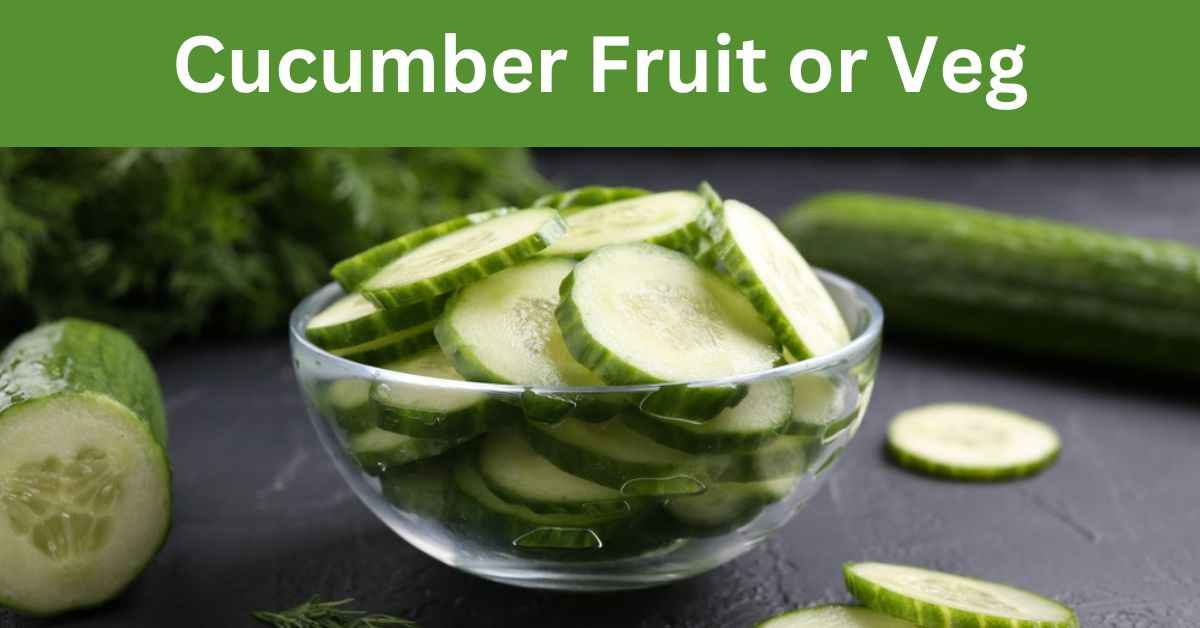
My daughter asked me this question last summer while we were picking cucumbers from our raised beds. She was seven. I gave her a confident wrong answer. Said they were vegetables, obviously. Where else do they go in the grocery store?
She came home from school three weeks later and told me I was wrong. Her teacher had explained the whole fruit thing. Flowers. Ovaries. Seeds. The works.
I’d been growing cucumbers for fifteen years. Didn’t know the actual answer.
So let’s talk about this. Is cucumber fruit or veg? The short answer: both. Depends on who you ask and why they’re asking.
Botanically speaking, cucumbers are fruits. They grow from flowers and contain seeds. That’s the scientific definition.
In the kitchen and at the grocery store, cucumbers are vegetables. They taste savory. We put them in salads. Nobody makes cucumber pie.
Both answers are correct. And if you grow cucumbers at home, understanding this dual identity actually changes how you approach the plant.
Quick Summary Table
| Question | Answer |
|---|---|
| Is cucumber a fruit? | Yes (botanically) |
| Is cucumber a vegetable? | Yes (culinarily) |
| Does it grow from a flower? | Yes |
| Does it contain seeds? | Yes |
| Is it sweet? | No |
| Used in salads? | Yes |
| Used in desserts? | Rarely/never |
| Needs pollinators to grow? | Yes (most varieties) |
| Related to melons? | Yes—same family |
Both answers are right. Context determines which one applies. Your daughter’s teacher wasn’t wrong. Neither were you.
The Science Says Fruit
Here’s the botany lesson I should have known before my kid corrected me.
A fruit is the part of a plant that develops from the flower’s ovary after pollination. Its job is to protect seeds and help spread them around. That’s it. That’s the whole definition.
Cucumbers fit perfectly.
Watch a cucumber plant sometime. Yellow flowers appear on the vine. Bees show up. They move pollen from male flowers to female flowers. The base of the female flower swells. That swelling becomes your cucumber.
Slice one open. See those seeds running down the center? That’s the giveaway. The flesh around those seeds? That’s the fruit part—the ripened ovary wall.
Sounds weird when you put it that way. But that’s what a cucumber is. A ripened plant ovary full of seeds wrapped in edible flesh.
The Cucumber Family Tree
Cucumbers belong to the Cucurbitaceae family. Fancy name. Simple group. These are the gourds.
The family includes:
- Watermelons
- Cantaloupes
- Honeydew
- Squash (all types)
- Pumpkins
- Zucchini
- Gourds
Notice something? We call melons fruit without argument. We call squash and zucchini vegetables. Pumpkins go both ways depending on whether they’re in soup or pie.
They’re all fruits botanically. Every single one. They all grow from flowers. They all contain seeds. They all developed from ovaries after pollination.
The plant doesn’t care what we call it.
The Kitchen Says Vegetable
Science has one definition. Cooking has another.
In culinary terms, vegetables are plant parts we eat in savory dishes. Fruits are sweet and eaten as snacks or desserts.
Cucumbers taste mild. Slightly grassy. A little bitter sometimes. Nobody describes them as sweet. You don’t put cucumbers on ice cream.
We slice them into salads. Pickle them. Add them to sandwiches. Put them in gazpacho. Occasionally drop them into water with mint for a fancy drink.
All savory uses. All vegetable behavior.
The grocery store agrees. Walk into any supermarket. Cucumbers sit in the produce section next to lettuce, peppers, and tomatoes. Not next to apples and oranges.
The Supreme Court Actually Ruled on This
Not cucumbers specifically. Tomatoes. But the logic applies.
In 1893, the United States Supreme Court decided a case called Nix v. Hedden. The question: are tomatoes fruits or vegetables for tariff purposes?
The court said vegetables. Not because of botany. Because of how people actually use tomatoes.
The ruling stated that in “common language,” tomatoes are vegetables. They’re “usually served at dinner in, with, or after the soup, fish, or meats which constitute the principal part of the repast, and not, like fruits generally, as dessert.”
Cucumbers would get the same treatment. Same logic. Same category.
So legally and culinarily, cucumber equals vegetable. Even though biologically, cucumber equals fruit.
Why This Matters If You Grow Cucumbers
Here’s where I stop being a dictionary and start being useful.
If you grow cucumbers at home, the fruit classification actually affects how you need to treat the plant.
Flowers Need Pollination
Cucumbers need bees. Or other pollinators. Without them, no fruit develops.
This becomes a problem in certain situations. Greenhouses with no bee access. Urban gardens with low pollinator populations. Early spring plantings before bees are active.
I’ve gotten messages from gardeners in new housing developments complaining about low cucumber yields. Their neighborhoods are still being built. No established gardens nearby. Few flowers. Few bees.
The plants look healthy. They flower like crazy. But the cucumbers either don’t form at all or start growing then shrivel up.
That’s a pollination problem. Because cucumbers are fruits, and fruits need pollinators.
Solutions:
- Plant flowers near your cucumber patch. Marigolds, zinnias, sunflowers. Bring the bees.
- Hand pollinate if necessary. Use a small brush or cotton swab. Move pollen from male flowers (thin stems, no bulge at base) to female flowers (bulge at base that looks like a tiny cucumber).
- Choose parthenocarpic varieties for greenhouses. These produce fruit without pollination. Marketed as “greenhouse cucumbers” or “seedless” types.
Male and Female Flowers Are Different
Speaking of flowers—cucumber plants make two kinds.
Male flowers appear first. They sit on thin stems and produce pollen. Their job is to make pollen available.
Female flowers come later. They have that distinctive swelling at the base—a miniature cucumber shape. They need to receive pollen to develop fruit.
New gardeners sometimes panic when their first flowers drop off without producing anything. That’s normal. Those were probably male flowers. They’re supposed to fall off after releasing pollen.
Watch for female flowers. When they appear and get pollinated, fruit development starts within days.
Harvest Timing Changes Everything
Because cucumbers are fruits containing seeds, timing matters more than you might think.
Pick cucumbers young. When seeds are still small and soft. When the flesh is crisp and the skin is tender.
Wait too long and the cucumber thinks its job is almost done. It puts energy into seed development. Seeds get big and hard. Flesh turns mushy and bitter. Skin toughens up.
Worse—the plant starts slowing down new fruit production. It thinks it succeeded in reproducing. Why keep working?
Pick early and pick often. The plant keeps trying to make mature seeds. You keep harvesting before it can. Production continues for weeks.
Most slicing cucumbers hit peak quality at 6-8 inches long. Pickling cucumbers at 2-4 inches. Some varieties differ. Check your seed packet.
Why Does This Confusion Exist?
Because cooking came before botany.
Humans were eating and categorizing foods for thousands of years before scientists studied plant reproduction. We sorted things by taste, use, and tradition. Sweet stuff with dessert. Savory stuff with dinner.
When botanists came along and defined fruit by ovary development, they were speaking a different language. A technical language that didn’t match how cooks already talked about food.
Neither system is wrong. They’re just measuring different things.
Botany asks: where on the plant did this grow?
Cooking asks: when during the meal do I serve this?
The cucumber answers both questions differently.
The Final Thought
Cucumber: fruit or veg?
Yes.
Both answers are correct. The question itself contains a false choice. It assumes one category excludes the other. It doesn’t.
In science class, cucumber goes in the fruit column.
In cooking class, it goes in the vegetable column.
In your garden, it goes wherever you want it to go. Just keep the bees happy, harvest often, and don’t wait until the seeds get crunchy.
And if your seven-year-old corrects you in front of the whole family, just admit you learned something new. I did.