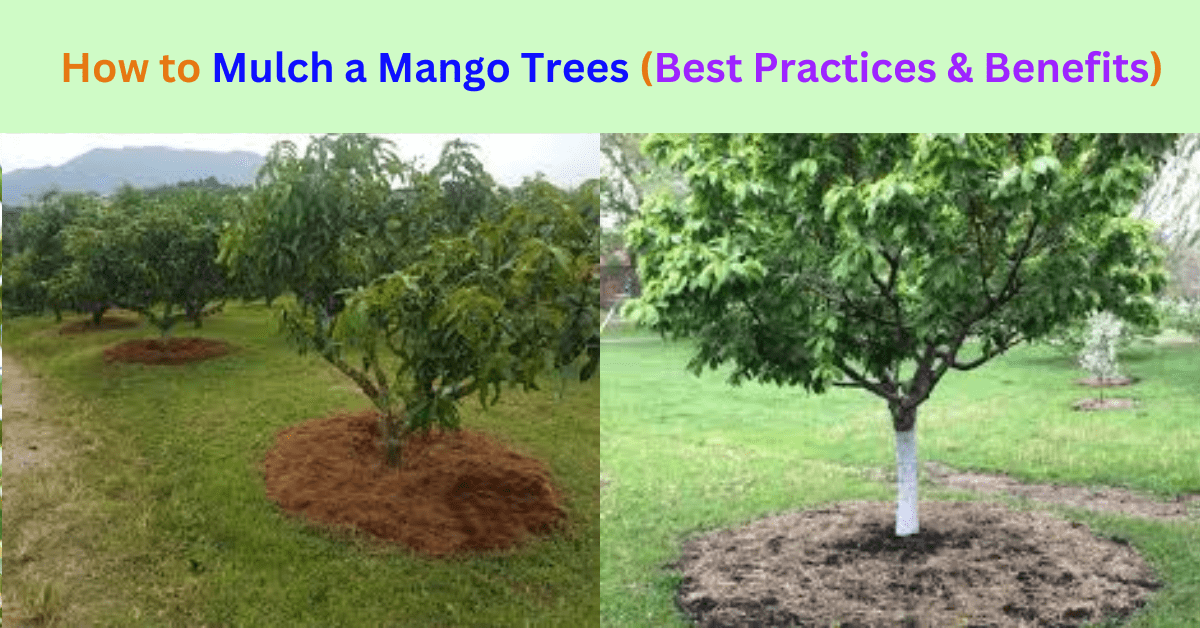
A grower I know in Homestead, Florida, had two young Kent mango trees planted the same year, same soil, same sun exposure. One got a thick ring of aged wood chips around the base. The other got nothing — just bare dirt. By the end of the second summer, the mulched tree had a trunk nearly twice as thick as the bare one. Its leaves were darker green, it needed watering half as often, and it flowered a full season earlier.
The only difference was a few inches of wood chips on the ground.
Mulching is one of those things that sounds too simple to matter much. But for mango trees, it’s one of the highest-impact, lowest-cost things you can do. I’ve seen it turn struggling trees around and push healthy trees into heavy production. Let me show you how to do it right — because doing it wrong can actually hurt your tree.
Why Mulching Your Mango Tree Matters
Think about where mango trees come from. Tropical forests. The ground under those trees is never bare. It’s covered in fallen leaves, fruit, bark, and organic debris. That layer does a lot of work — holding moisture, feeding the soil, keeping roots cool, and supporting billions of microorganisms.
When you plant a mango tree in your yard or orchard, you strip all that away. The soil bakes in the sun, dries out fast, and loses its biology. Mulching puts that natural ground cover back.
Here’s what the research shows:
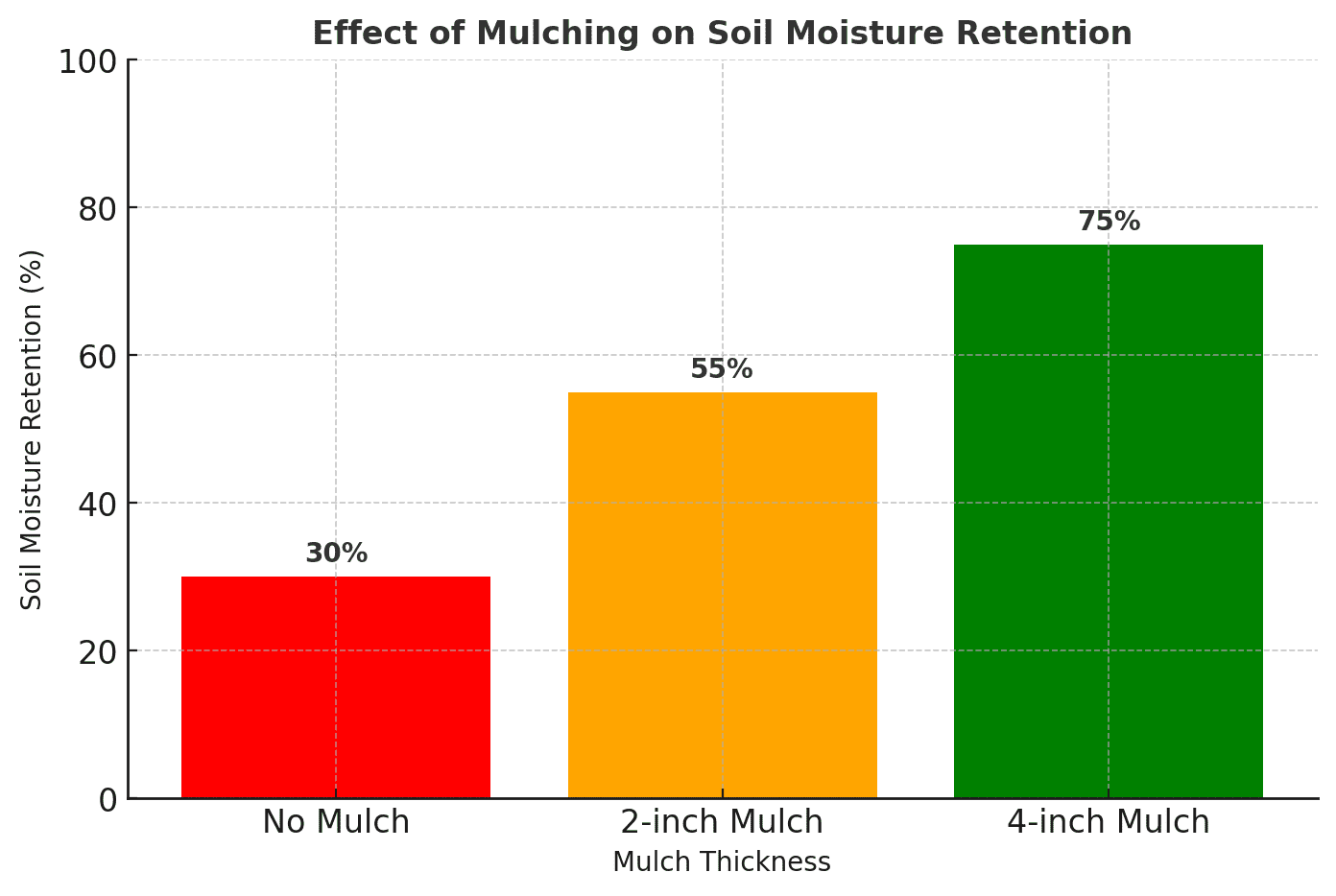
- 50 to 70% less water loss from the soil surface compared to bare ground (Journal of Horticultural Science & Biotechnology)
- Root zone temperatures drop 10 to 15°F under mulch during summer (University of Florida IFAS)
- 25 to 35% increase in fruit yield in mulched mango orchards over a 3-year trial (ICAR-Indian Institute of Horticultural Research)
- 30% greater trunk growth in mulched young trees during the first 3 years (Tropical Fruit Research Station, Australia)
The moisture savings alone are worth it. But when you add up the weed suppression, the soil improvement from decomposing organic matter, the beneficial fungi and earthworms that move in, and the reduced splash-up of soil-borne disease spores like anthracnose — the case is overwhelming.
“Mulching is the single most underutilized practice in tropical fruit tree care.” — Dr. Bruce Schaffer, Professor of Tropical Fruit Crop Physiology, University of Florida
According to the University of Florida’s Agricultural, mulching can reduce soil water loss by up to 25%, meaning less frequent watering and healthier roots. Without mulch, the soil dries out quickly, leading to stressed trees and reduced fruit production.
Best Mulch Types for Mango Trees
Not all mulch is created equal. Here’s what works and what doesn’t.
The Top Picks
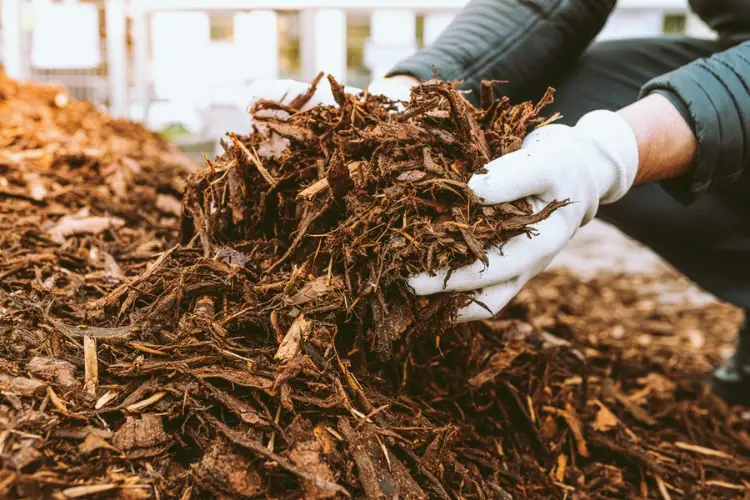
Aged wood chips — the #1 choice. They decompose slowly (12 to 24 months), retain moisture well, support mycorrhizal fungi, and are often free from local tree services or municipal composting programs. One truckload can mulch 5 to 10 trees and last over a year. Use aged or composted chips — fresh chips can temporarily tie up nitrogen at the soil surface during the first months of breakdown.
Pine bark is another strong option. It lasts even longer (18 to 36 months), looks good in landscaped yards, and has a slightly acidifying effect that mango trees appreciate since they prefer pH 5.5 to 7.0.
Coconut coir holds up to 10 times its weight in water. It’s pH neutral, lightweight, and decomposes slowly. Great for container mango trees and dry climates. Can be pricier outside tropical areas.
Straw works well as a budget option. It’s light and easy to spread. But it breaks down fast (3 to 6 months) and may carry weed seeds. Use straw, not hay — hay has more seeds.
Dried leaves are free and abundant. They build great soil over time. Mix them with coarser material so they don’t mat down into a water-repellent layer.
Compost works as a thin base layer (1 to 2 inches) under a slower-decomposing mulch on top. It feeds the soil immediately while the wood chips or bark above provide long-term protection. This layered approach is what many professional growers use.
What to Avoid
Black plastic sheeting — traps heat, creates anaerobic conditions, blocks rain from reaching roots. Don’t use it around mango trees.
Dyed or colored mulch — may contain chemicals from recycled treated wood. Stick to natural, untreated materials.
Gravel or river rock in hot climates — stones absorb heat and radiate it back into the root zone. Fine for cooler areas, but not ideal where mangoes actually grow.
Quick Comparison
| Mulch Type | Longevity | Moisture Retention | Soil Improvement | Mango Rating |
| Aged wood chips | 12–24 months | Excellent | Excellent | ⭐⭐⭐⭐⭐ |
| Pine bark | 18–36 months | Good | Good | ⭐⭐⭐⭐⭐ |
| Coconut coir | 12–18 months | Excellent | Good | ⭐⭐⭐⭐⭐ |
| Straw | 3–6 months | Good | Moderate | ⭐⭐⭐⭐ |
| Dried leaves | 3–9 months | Moderate | Good | ⭐⭐⭐⭐ |
| Compost (as base layer) | 1–3 months | Moderate | Excellent | ⭐⭐⭐⭐ |
| Black plastic | 1–3 years | N/A | Harmful | ❌ |
🌿 Pro Tip: Call your local tree service or green waste facility. Many deliver aged wood chips for free — they need somewhere to dump them. It’s the best deal in gardening.
A study by the Journal of Environmental Horticulture found that mulched trees had up to 85% fewer weeds compared to non-mulched trees. This means less time spent weeding and more time enjoying your mango harvest!
How to Mulch a Mango Tree — Step by Step
What You’ll Need
- Mulch material of your choice
- Wheelbarrow or garden cart
- Rake
- Garden fork
- Tape measure or ruler
- Gloves
- Optional: compost for a base layer
Step 1 — Clear the Area
Pull all weeds around the tree by hand or with a hoe. Remove roots. Lightly scratch the soil surface with a fork to break any crust — this helps water and air move through once the mulch goes down.
Don’t dig deep. Mango trees have shallow feeder roots near the surface. Aggressive digging damages them.
Step 2 — Create the Mulch-Free Zone
This is the most important step. Don’t skip it.
Leave a 6 to 8-inch gap between the mulch and the trunk on all sides. The trunk base and root flare (where the trunk widens into the roots) must stay visible, dry, and exposed to air.
Mango bark is not meant to sit in constant contact with wet material. Mulch piled against the trunk traps moisture, invites fungal infection, attracts bark-boring insects and rodents, and can eventually kill the tree.
A study in the Journal of Arboriculture found that trees with mulch piled against the trunk — what arborists call “mulch volcanoes” — had a death rate 3 times higher within 5 years compared to trees mulched correctly.
“The single most important rule in mulching any tree is keeping mulch away from the trunk. I’ve seen more mango trees killed by mulch volcanoes than by drought or pests.” — Dr. Edward Gilman, Professor Emeritus, University of Florida
Step 3 — Determine Your Coverage Area
Spread mulch out to the drip line — the imaginary circle under the outermost branch tips. That’s where most of the feeder roots are.
| Tree Age | Mulch Ring Radius |
| Young seedling (0–1 year) | 2–3 feet from trunk |
| Young tree (1–3 years) | 3–4 feet |
| Medium tree (3–7 years) | 4–6 feet |
| Mature tree (7+ years) | 6–10+ feet (to drip line) |
If full drip line coverage isn’t practical, aim for at least 4 to 6 feet from the trunk in every direction.
Step 4 — Apply the Right Depth
For most organic mulch materials: 3 to 4 inches. That’s the sweet spot. Thick enough to suppress weeds and hold moisture. Thin enough to let air and water through.
Straw compresses, so apply it thicker — 4 to 6 inches. Compost as a sole mulch should be thinner — 1 to 2 inches.
Never go deeper than 5 to 6 inches. Too much mulch restricts oxygen to the roots and can cause them to grow upward into the mulch instead of down into the soil. Those shallow roots are vulnerable when the mulch eventually decomposes.
Step 5 — Shape It Right
The correct shape is a flat, even donut — open center, level ring, edges tapered. Not a volcano. Not a mound. Not a bowl that collects water against the trunk.
Step 6 — Water After Applying
Soak the entire mulched area with a gentle spray. This settles the mulch, starts moisture absorption, and begins the soil-mulch interaction. Check the next day and add more if things settled down.
Step 7 — Monitor and Maintain
Check mulch depth once a month. Pull back any material that’s shifted toward the trunk. Fluff or turn compacted mulch every 2 to 3 months to prevent it from matting into a water-repellent layer. Replenish when the depth drops below 2 inches.
| Mulch Type | How Often to Replenish |
| Aged wood chips | Every 12–18 months |
| Pine bark | Every 18–24 months |
| Straw | Every 3–6 months |
| Dried leaves | Every 4–8 months |
| Compost | Every 2–3 months |
When to Mulch a Mango Tree
The best time for a major mulch application is early spring — before the hot weather hits. This locks in soil moisture right when the tree needs it most for fruit development.
The second best window is after the rainy season ends — replenish what the rains washed away or decomposed, and prepare for the dry season ahead.
If you’re in a subtropical area like South Florida, add extra mulch depth (up to 5 inches) in late fall for winter frost insulation. Pull it back to 3 to 4 inches in spring.One situation where you should reduce or pull back mulch: during the pre-flowering water stress period. Mango trees need 2 to 3 months of dry conditions before flowering to trigger bloom. Some growers thin out the mulch during this window so the soil dries faster. Once flowers appear and you resume irrigation, put the full mulch layer back.
Young Trees vs. Mature Trees — Different Approaches
Young mango trees (under 3 years) are more vulnerable in both directions. They’re more sensitive to drought without mulch and more sensitive to trunk rot from bad mulching. Keep the mulch ring smaller (2 to 4 feet), use moisture-retentive materials like coir or composted chips, and be strict about that 6-inch trunk gap. Expand the ring outward by 6 to 12 inches each year as the root zone grows.
Mature trees can handle a broader, slightly deeper ring. Extend mulch all the way to the drip line if you can. The trunk gap should be wider too — 8 to 12 inches for a large trunk. Replenishment is less urgent since the established root system is more resilient.
Mulching Container Mango Trees
Container trees actually need mulch more than in-ground trees. The pot heats up fast in the sun. The limited soil volume dries out quickly. A 1.5 to 2.5-inch layer of mulch on the soil surface can cut your watering frequency by 30 to 50%.
Best materials for pots: coconut coir, mini pine bark chips, or sphagnum moss. Keep a 3 to 4-inch gap around the trunk (proportional to the smaller container). Make sure mulch doesn’t block drainage holes.
A nice combination for containers: 1 inch of fine coir on the bottom with 1 inch of mini bark nuggets on top. The coir holds moisture while the bark looks clean and stays in place.
How Mulch Changes Your Watering and Feeding Routine
After mulching, you water less often but just as deeply. A well-mulched mango tree in summer might go 4 to 5 days between waterings instead of 2 to 3. Always check the soil under the mulch before you water — push the mulch aside, stick your finger 2 to 3 inches down. If it’s moist, wait.
For fertilizing, pull the mulch back, apply granular fertilizer on the soil surface, water it in, then replace the mulch. Liquid fertilizer or fertigation through drip lines passes through mulch without any issue.
Decomposing organic mulch provides a slow, natural nutrient supply on its own. You can reduce synthetic fertilizer by about 20 to 30% once you have an established mulch ring. The soil biology that builds up under organic mulch — earthworms, beneficial bacteria, mycorrhizal fungi — does a lot of the nutrient cycling work for you.
The combination of drip irrigation running under organic mulch is the gold standard. Research shows this pairing can produce 40 to 60% higher yields than bare-soil flood irrigation.
Frequently Asked Questions
Can you mulch mango trees with grass clippings?
Yes, but use dried grass clippings in a thin layer to avoid matting and mold.
How often should you replace mulch?
Replace mulch every 6-12 months or when it decomposes significantly.
Does mulching attract pests?
Some mulches can attract pests; using coarse wood chips or neem-based mulch can help prevent infestations.
What is the best time to mulch a mango tree?
The best time to apply mulch is spring or early summer to conserve moisture before the dry season.
Final Thought
The grower in Homestead I mentioned at the start? He mulches every mango tree he owns now. The cost is basically zero — free wood chips from a local tree service, delivered to his driveway. He waters half as much, weeds almost never, and his trees are visibly healthier than the bare-soil trees on the property next door. A few inches of wood chips on the ground. That’s all it took.