A woman named Lin taught me about taro at a community garden in San Jose three years ago. She was 74, had been growing vegetables since she was a kid in Taiwan, and she laughed at my sad little potato patch.
“Why are you growing what the grocery store already sells cheap?” she asked. Then she handed me a taro corm the size of a softball. “Grow this instead. Nobody here knows how.”
She was right. I didn’t know how. Killed my first three attempts. But I kept at it because Lin kept showing up with advice, recipes, and that particular kind of judgment that only comes from someone who’s been gardening for 60 years.
Now I grow taro, sweet potatoes, and Chinese yam. And I’ve learned that starchy root vegetables in Asia aren’t just crops—they’re a whole different way of thinking about what your garden can produce.
Asia grows over 300 million tonnes of starchy root vegetables every year. That’s nearly 40% of the world’s total. These crops have fed civilizations for thousands of years. And most home gardeners in North America have never tried growing a single one of them.
Let’s fix that.
What Are Starchy Root Vegetables in Asia?
Starchy root vegetables in Asia are underground plant parts rich in carbohydrates that serve as staple foods across the continent. These nutrient-dense crops grow beneath the soil surface and store energy as starch, providing essential calories and nutrition to billions of people.
Quick biology lesson: roots grow down into the soil. Tubers are swollen underground stems. Corms are bulb-like stem bases. People mix up the terms all the time. Doesn’t matter much for growing purposes, but if you’re curious, sweet potatoes are true roots while taro is a corm.
The point? These plants are designed to store food. That’s what makes them valuable for growers.
The Major Types You Can Actually Grow
Taro (Colocasia esculenta)
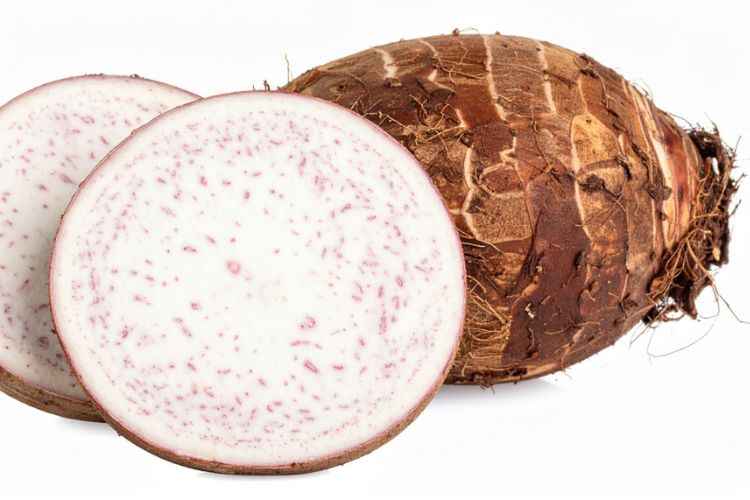
This is Lin’s specialty. The plant looks like big elephant ears—broad, arrow-shaped leaves that can get two feet wide. The corm underneath is what you eat.
Taro needs water. Lots of water. Some varieties grow partially submerged in paddies. Others tolerate regular garden conditions but still want consistently moist soil. Think of it like growing at the edge of a pond.
Native to Southeast Asia. Now grown everywhere from Hawaii to West Africa to the Philippines. China produces the most. Japan, Indonesia, and Egypt grow large amounts too.
The corm has brown, hairy skin. The flesh inside is usually white or purple-speckled. You can’t eat it raw—contains calcium oxalate that irritates your mouth and throat. Cooking neutralizes it completely.
Growing tips: Plant in spring after frost danger passes. Full sun to part shade. Rich, moist soil. Harvest when leaves start yellowing, usually 7-12 months after planting. One corm produces multiple cormels you can replant.
Sweet Potato (Ipomoea batatas)
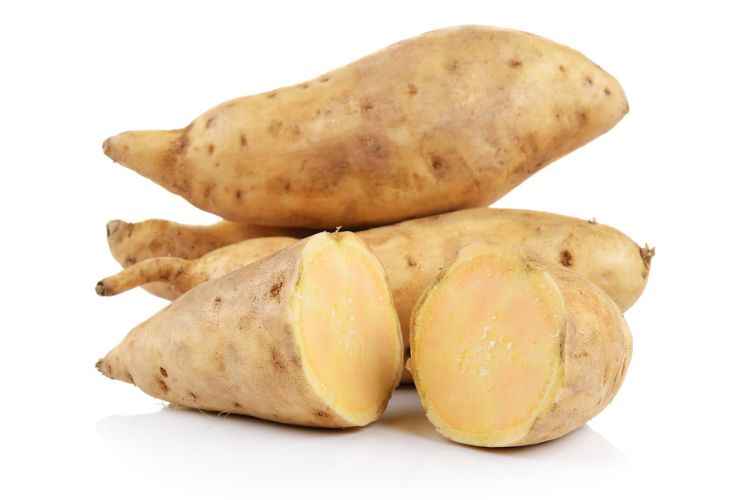
Different from regular potatoes. Not even related. Sweet potatoes are morning glory relatives from Central America, but Asia now grows most of the world’s supply. China alone produces about 55% of global sweet potato output.
Asian varieties are different from what you find at American grocery stores. Japanese sweet potatoes have purple skin with yellow flesh—dry and chestnut-like. Okinawan purple has purple flesh throughout. Chinese varieties include everything from stringy, chestnut-flavored types to super-sweet orange-fleshed ones.
Sweet potatoes handle poor soil better than most vegetables. They actually produce more in lean soil than rich soil—too much nitrogen gives you beautiful vines and tiny roots.
Growing tips: Start from slips (rooted sprouts), not chunks of potato. Plant after soil warms to 65°F. They need 100-150 frost-free days. Full sun. Don’t overwater once established. Harvest before first frost—cold damages the roots.
Cassava (Manihot esculenta)
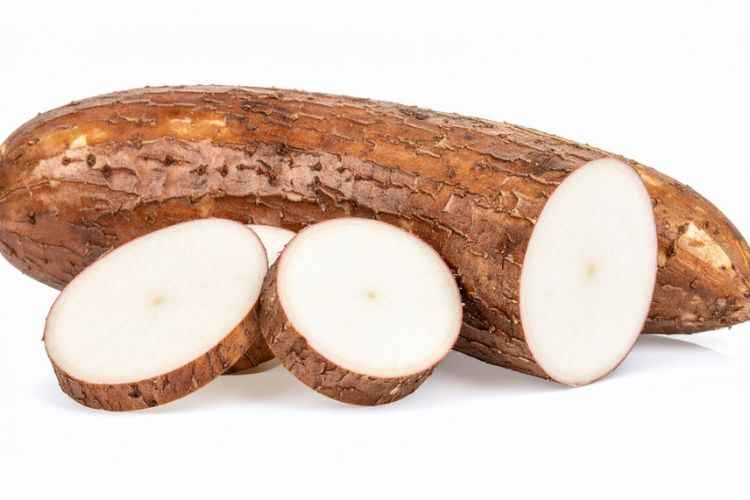
Also called manioc, yuca, or tapioca plant. Originally from South America but Thailand, Indonesia, and Vietnam now rank among the top global producers.
Cassava is tough. Drought tolerant. Handles poor soil. Produces calories even when other crops fail. That’s why it’s a food security crop across tropical Asia.
Here’s the catch: cassava contains cyanogenic compounds. The bitter varieties have more and need extensive processing. Sweet varieties have less but still need cooking. Don’t eat it raw.
Growing tips: Cassava needs heat. Can’t handle frost at all. Plant stem cuttings (8-12 inches long) at an angle. Takes 8-18 months to mature depending on variety. The leaves are edible too—high in protein—but also need cooking.
If you’re in USDA zones 8-11, you might be able to grow cassava outdoors. Everyone else needs a greenhouse or treats it as an annual.
Yam (Dioscorea species)
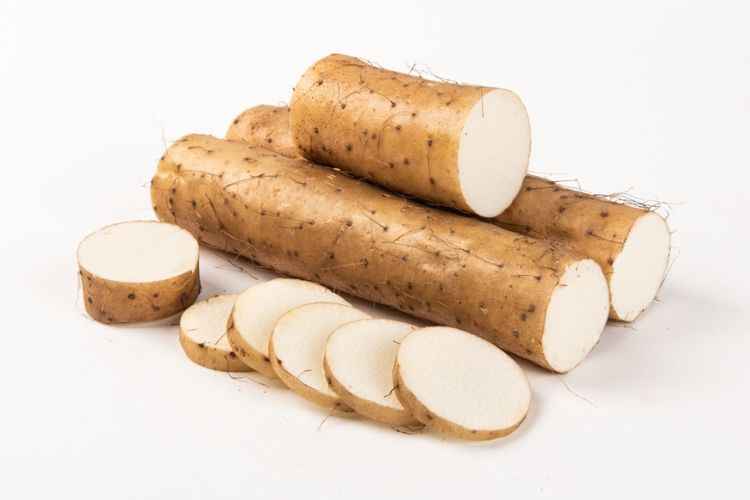
Real yams. Not sweet potatoes. Americans confuse these constantly. Yams are a completely different plant family.
Several species grow across Asia. Greater yam (Dioscorea alata) is common in Southeast Asia—this is the one that includes purple yam or ube, famous in Filipino desserts. Chinese yam (Dioscorea polystachya) grows in East Asia and has been used in traditional medicine for centuries. Lesser yam (Dioscorea esculenta) is smaller but sweeter.
Yams are vines. They climb. You need to give them support—trellises, poles, or let them scramble up existing structures. The tubers form underground and can get massive. Some greater yams exceed 100 pounds, though home garden specimens usually stay much smaller.
Growing tips: Plant tuber pieces or bulbils (small aerial tubers some species produce) after soil warms. Need 6-10 months of warm weather. Rich, loose soil. Deep watering. Harvest when vines die back in fall.
Lotus Root (Nelumbo nucifera)
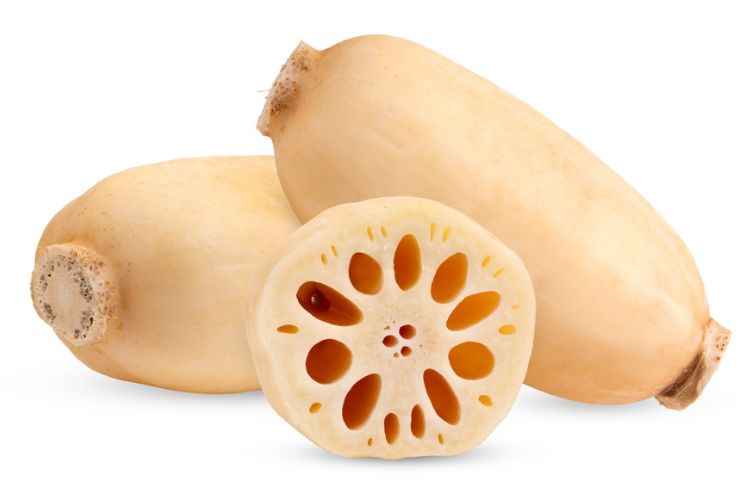
This one’s different. Lotus grows in water. The “root” is actually a rhizome that runs horizontally through the mud beneath ponds.
If you’ve seen lotus root in Asian grocery stores—those tan, round cross-sections with a pattern of holes—that’s what you’re growing for. The texture stays crunchy even when cooked.
China, Japan, and India grow lotus commercially. In gardens, people grow it in containers, lined ponds, or even plastic kiddie pools with mud at the bottom and 6-12 inches of water on top.
Growing tips: Plant rhizomes in spring, laying them horizontally in heavy loamy soil under water. Full sun. Warm summer temperatures. The leaves and flowers are beautiful—this can be an ornamental that happens to produce food. Harvest in fall when leaves start dying back.
Arrowroot (Maranta arundinacea)
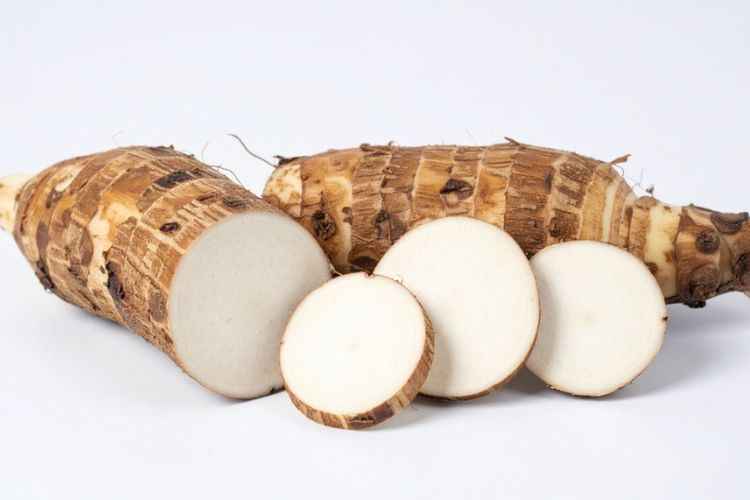
Tropical Asia and the Caribbean both grow arrowroot. The starch extracted from it is used for thickening—makes incredibly silky sauces and is easy to digest.
The rhizomes look like small, oblong tubers. The plant grows 3-6 feet tall with broad leaves. Pretty enough for ornamental use.
Growing tips: Needs tropical or subtropical conditions. Plant rhizome pieces in spring. Rich, moist soil. Part shade is fine. Harvest after 10-12 months when leaves yellow. Most of us in temperate zones would need to grow this in containers and bring it inside for winter.
Growing Conditions These Plants Need
Most starchy root vegetables from Asia share some preferences:
Warm weather. These are tropical and subtropical crops. They don’t handle frost. Plan your planting around your last frost date and your first frost date.
Loose, well-drained soil. Roots need room to expand. Compacted clay produces stunted, misshapen harvests. Raised beds help if your native soil is dense.
Consistent moisture. Not waterlogged (except lotus), but not drought-stressed either. Root crops split when watering goes from dry to soaked repeatedly.
Long growing seasons. Many take 7-12 months from planting to harvest. In shorter-season areas, start early, use season extension, or choose faster-maturing varieties.
The Nutrition Angle
These crops carry their weight nutritionally.
Sweet potatoes are vitamin A powerhouses—especially orange and purple varieties. One cup of orange sweet potato has over 700% of your daily vitamin A needs.
Taro provides potassium and fiber. The fiber content helps with digestion and keeps you full.
Cassava is primarily calories—great energy source but lower in vitamins than others. Pair it with leafy greens.
Purple yam (ube) contains anthocyanins—the same antioxidants that make blueberries purple.
Lotus root has decent vitamin C and potassium, plus unique polyphenols.
None of these are complete foods on their own. But as part of a diverse diet, they offer different nutrients than potatoes and grains.
How People Actually Use These
Taro: Boiled, mashed, made into poi (Hawaiian style), added to soups and stews, turned into chips, used in bubble tea. The leaves are edible too when cooked.
Sweet potato: Roasted, steamed, pureed for desserts, made into noodles (Korean sweet potato starch noodles), dried into snacks. Japanese sweet potato desserts are their own category.
Cassava: Boiled as a starch, fried as chips, processed into tapioca flour, fermented into various traditional foods. Thai cassava cake is sweetened with coconut.
Yam: Boiled, steamed, added to curries and stews. Ube is turned into jam, ice cream, cakes, and that bright purple Filipino dessert called ube halaya.
Lotus root: Stir-fried, braised, pickled, stuffed, made into chips. Stays crunchy, which makes it unique among root vegetables.
Why Grow These Instead of Potatoes?
Fair question. Potatoes are easier. You probably already know how.
But here’s my argument:
- These crops produce in conditions potatoes don’t like. Too hot for potatoes? Sweet potatoes thrive. Too wet? Taro and lotus handle that.
- They store energy differently. Diversity in your food supply means resilience.
- They’re interesting. Growing something new teaches you new skills.
- Most can’t be bought fresh at regular grocery stores. You’re growing access to flavors your neighbors don’t have.
Lin’s taro patch produces through summers that would stress my potato plants into an early grave. That’s practical, not exotic.
The Reality of Growing These in Non-Asian Climates
Some of you are in zones 9-11. You can grow most of these outdoors without much trouble.
The rest of us need to work harder. Greenhouses. Cold frames. Container growing that moves inside for winter. Heat mats for starting. Season extension at both ends.
Or we choose the most adaptable options. Sweet potatoes grow almost anywhere with 100+ warm days. Some Chinese yam varieties tolerate cold. Taro works in containers you can move.
I killed three rounds of taro before I got it right. Started too early when soil was cold. Didn’t keep the soil wet enough. Harvested too late and frost damaged the corms.
Fourth try worked. Lin said I was “finally listening.”
Maybe that’s the actual lesson here. These crops have grown in Asia for thousands of years. The knowledge exists. We just have to find it and apply it to our own dirt.
Start with one. See what happens.