
My daughter received a Venus flytrap for her seventh birthday. Within two weeks, she had fed it three flies, named it “Chomper,” and became convinced we needed an entire carnivorous plant collection.
“Dad, why can’t all our plants eat the bugs instead of us spraying them?”
Good question, honestly. That birthday gift sparked a fascination that led me down a rabbit hole of plants that eat bugs. I now have about a dozen carnivorous species growing in various spots around our home and garden.
These plants are genuinely remarkable. There are over 800 species of carnivorous plants worldwide, found on every continent except Antarctica. They’ve evolved independently at least six times throughout history, each time developing unique ways to trap and digest insects.
Let me share what I’ve learned about these botanical predators—which ones make great additions to your home, how to care for them, and whether they’ll actually help control pests.
Understanding Plants That Eat Bugs
What Are Carnivorous Plants?
Carnivorous plants—also called insectivorous plants—get nutrients by trapping and digesting insects and other small organisms. They still photosynthesize like regular plants. The bugs are a supplement, not their main food source.
These plants evolved in nutrient-poor environments. Bogs, swamps, and rocky terrain often lack nitrogen and phosphorus in the soil. The plants adapted by getting these nutrients from insects instead.
Think of it like this: photosynthesis gives them energy (like carbohydrates for us), while eating bugs gives them protein and minerals.
Why Did Plants Evolve to Eat Bugs?
Survival in harsh conditions drove this evolution.
Imagine a swamp with waterlogged, acidic soil. Most plants struggle here because nutrients wash away constantly. But a plant that could extract nitrogen from flies? That plant thrives where others fail.
Charles Darwin was fascinated by these plants. In 1875, he wrote an entire book called “Insectivorous Plants” after spending years studying sundews. He called the sundew “a most wonderful plant.”
The evolution happened independently multiple times—at least six separate occasions. Plants in completely different families developed similar trapping methods. This is convergent evolution. When a solution works, nature finds it again and again.
Types of Trapping Mechanisms
Different plants that eat bugs use different strategies:
Snap traps close rapidly when triggered. The Venus flytrap is the famous example—closing in about 0.1 seconds.
Pitfall traps are slippery tubes. Insects fall in and can’t climb out. Pitcher plants use this method.
Sticky traps work like flypaper. Sundews and butterworts have adhesive surfaces that grab prey.
Suction traps create vacuums. Bladderworts use tiny underwater bladders that suck in prey faster than you can blink—under one millisecond.
Lobster pot traps have inward-pointing hairs. Prey can push in but can’t push back out.
Each mechanism evolved for specific environments and prey types.
15 Fascinating Plants That Eat Bugs
Venus Flytrap (Dionaea muscipula)
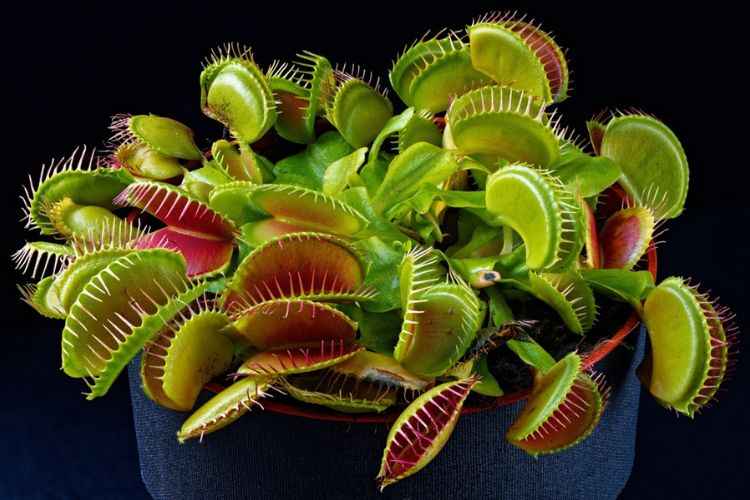
The Venus flytrap is the celebrity of carnivorous plants. Everyone knows it. Everyone wants one.
What many don’t know: this plant grows naturally only in a small area of North Carolina and South Carolina. It’s endangered in the wild.
The snap trap is incredible engineering. When a fly touches the trigger hairs twice within 20 seconds, the trap snaps shut. This double-touch requirement prevents the plant from wasting energy on false alarms like raindrops.
Digestion takes 5-12 days. Then the trap reopens. But here’s the catch—each trap only works about 3-5 times before it dies. That’s why touching traps just for fun is bad for the plant.
Sundews (Drosera species)
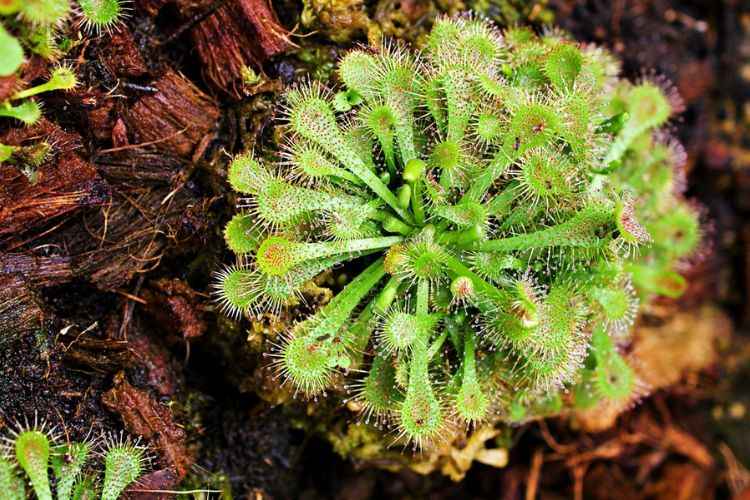
Over 200 sundew species exist worldwide. They’re found on every continent except Antarctica.
Their leaves are covered in tentacles tipped with sticky “dew.” This glistening liquid attracts insects, which get stuck. Then the leaf slowly curls around the prey, bringing more tentacles into contact.
I grow Cape sundews (Drosera capensis) on a sunny windowsill. They’re forgiving plants—excellent for beginners. They’ve caught countless fungus gnats that would otherwise bother my other houseplants.
North American Pitcher Plants (Sarracenia)
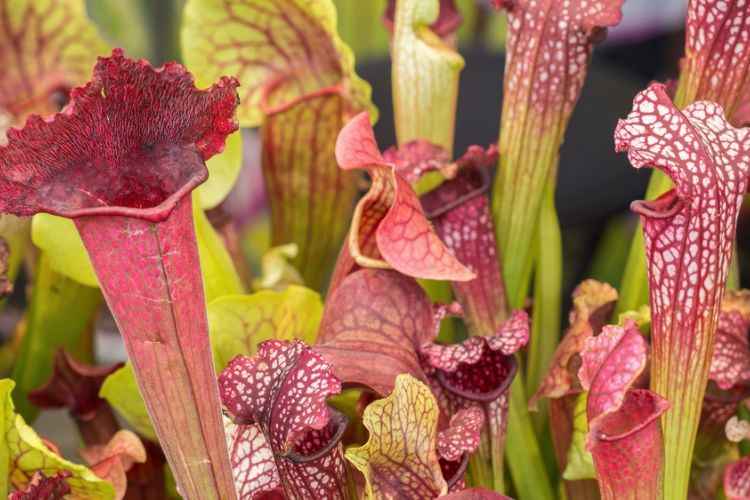
These are dramatic plants. Tall, trumpet-shaped leaves in greens, reds, and yellows. Some grow over two feet tall.
Insects are attracted to nectar at the rim. They slip on the waxy interior and fall into digestive fluid at the bottom. Downward-pointing hairs prevent escape.
I grow Sarracenia outdoors in a bog container. They’re hardy—surviving winters here with no protection. They go dormant in winter and come back stronger each spring.
Tropical Pitcher Plants (Nepenthes)
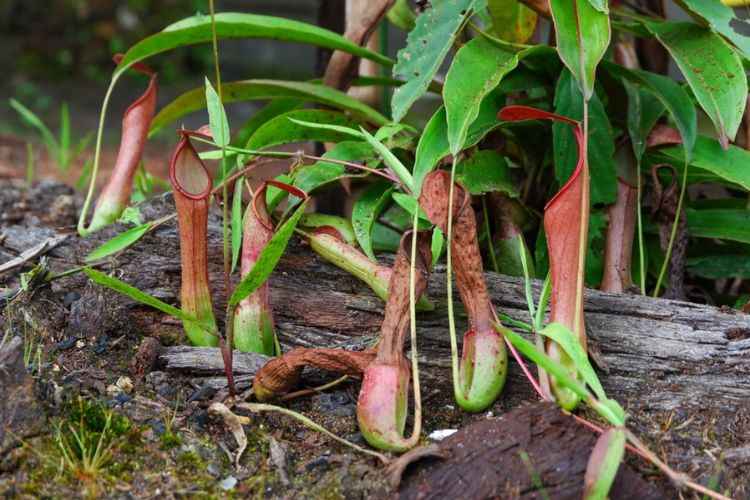
If Sarracenia are impressive, Nepenthes are stunning. Over 170 species exist, mostly from Southeast Asia.
These plants produce hanging pitchers on vine-like tendrils. Some species grow enormous—large enough to trap rats and small lizards. Most settle for insects.
The variety of colors, shapes, and sizes is incredible. Some pitchers are striped. Some are spotted. Some are nearly black.
They need high humidity and warmth, making them good for terrariums or humid bathrooms with bright light.
Cobra Lily (Darlingtonia californica)
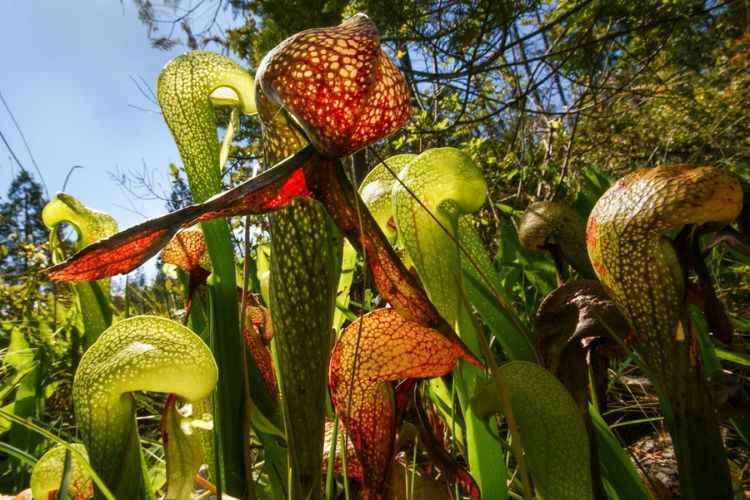
This plant looks exactly like a striking cobra with a forked tongue. It’s native to California and Oregon mountain bogs.
Unlike other pitcher plants, cobra lilies don’t make their own digestive enzymes. They rely on bacteria to break down prey.
They’re challenging to grow because they need cold roots. In the wild, cold mountain water runs past their roots constantly. Many growers fail because they can’t replicate this.
Butterworts (Pinguicula)
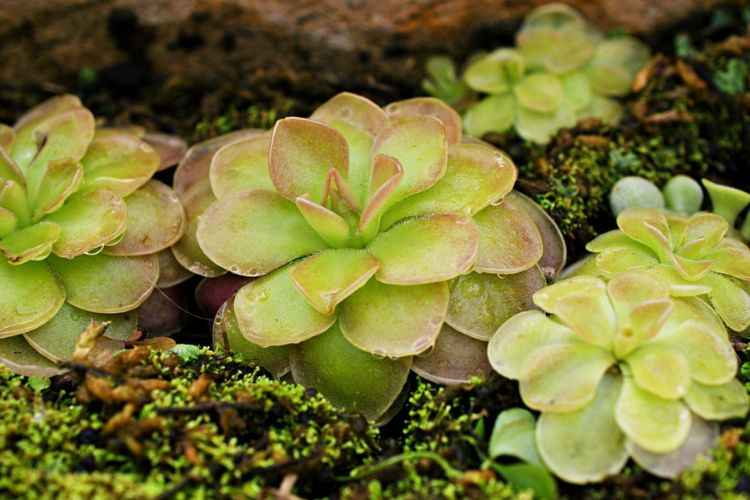
Butterworts have flat, sticky leaves that work like flypaper. When insects land, they’re stuck. The leaf edges curl slightly inward and digestive enzymes go to work.
Mexican butterworts are popular houseplants. They produce pretty flowers and tolerate average home conditions. Several sit on my kitchen windowsill catching fruit flies.
About 80 species exist, from tropical Mexico to the Arctic tundra.
Bladderworts (Utricularia)
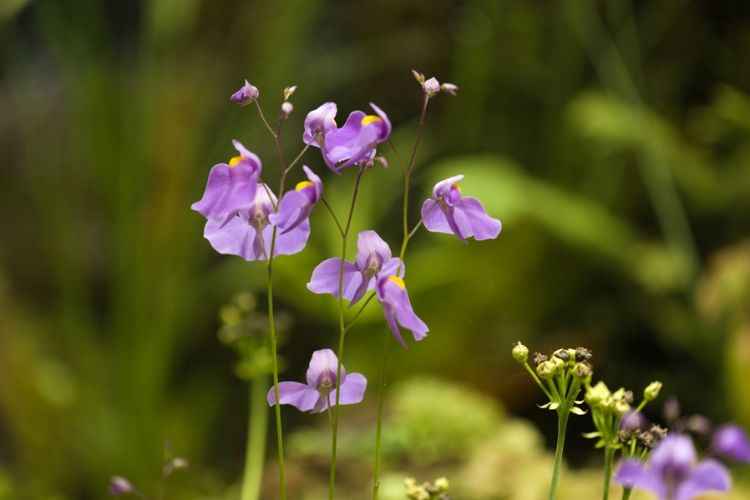
The largest carnivorous plant genus with over 230 species. They grow in water, on land, and even on trees.
Their trapping mechanism is the fastest in the plant kingdom. Tiny bladder traps create negative pressure. When a small organism touches trigger hairs, the bladder opens and sucks in prey in under one millisecond.
Most people overlook bladderworts because the traps are tiny. But they produce beautiful flowers—often purple, yellow, or white—that look nothing like the bizarre traps below.
Waterwheel Plant (Aldrovanda vesiculosa)
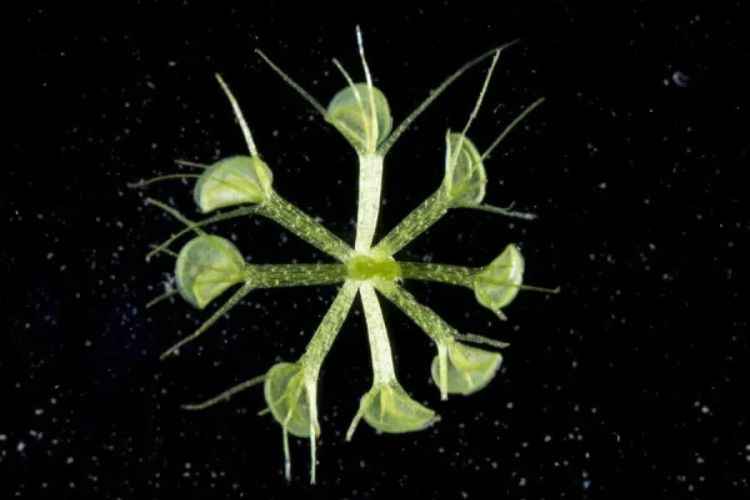
Imagine a Venus flytrap that floats in water. That’s the waterwheel plant.
This aquatic carnivore has small snap traps along underwater stems. It has no roots—just drifts around catching small aquatic organisms.
Critically endangered in the wild, it’s challenging but rewarding to grow. I’ve never managed it successfully, but I keep trying.
Corkscrew Plants (Genlisea)
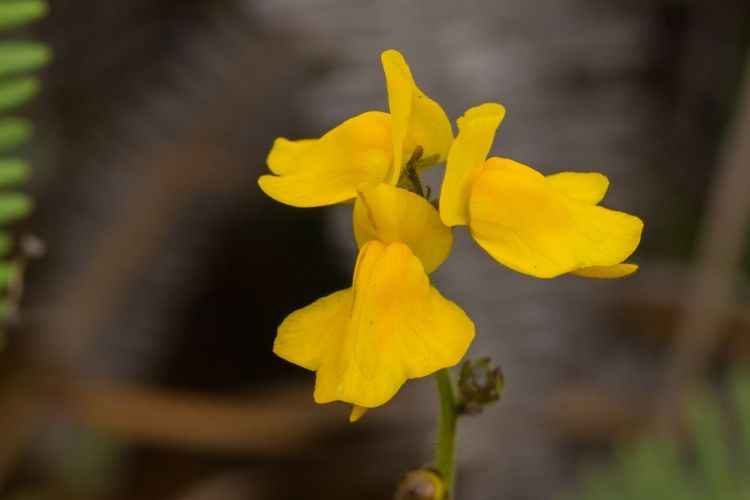
About 30 species grow in Africa and South America. Their traps are underground—modified leaves that form corkscrew-shaped tunnels.
Microscopic organisms in the soil enter the tunnels but can’t exit due to inward-pointing hairs. It’s a one-way trip.
Above ground, they look like small rosettes of ordinary leaves. Pretty yellow or purple flowers give away their presence.
Rainbow Plant (Byblis)
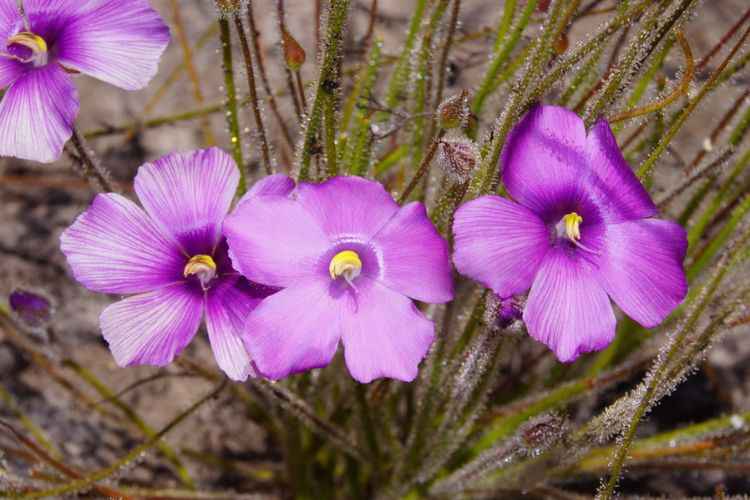
Native to Australia, these plants look like graceful grass covered in glistening dew.
They’re called rainbow plants because the sticky droplets catch sunlight and create rainbow-like effects.
Some debate exists about whether they’re truly carnivorous—they may rely on assassin bugs to digest prey for them.
Dewy Pine (Drosophyllum lusitanicum)
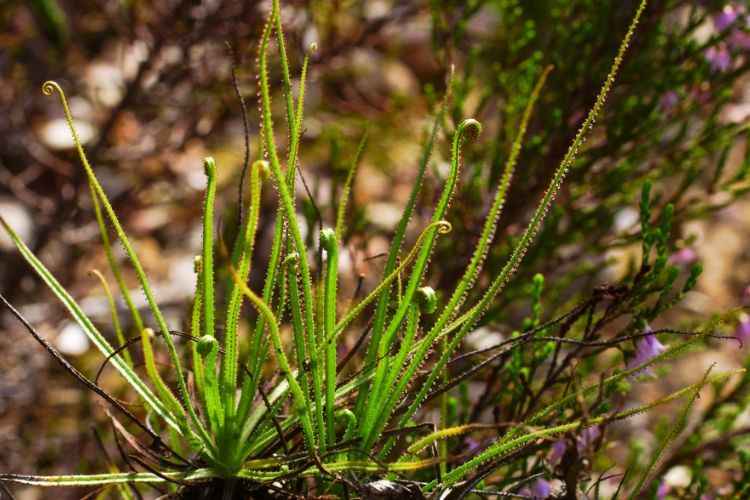
This is the oddball carnivore. Most plants that eat bugs love wet conditions. Dewy pine hates them.
Native to dry areas of Spain, Portugal, and Morocco, it’s the only carnivorous plant adapted to Mediterranean-type climates.
It smells like honey, attracting insects to its sticky leaves. But wet roots kill it fast. A challenging but rewarding species for the right conditions.
Albany Pitcher Plant (Cephalotus follicularis)
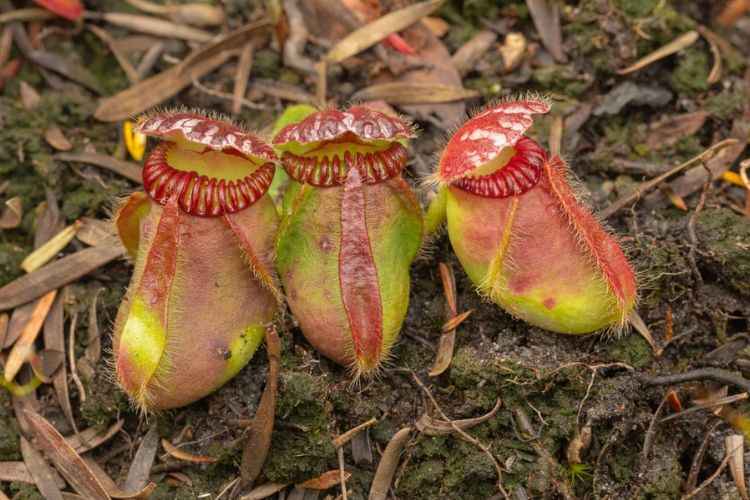
From southwest Australia, this small plant produces adorable jug-shaped traps. It’s not related to other pitcher plants—completely independent evolution.
The pitchers develop reddish coloration in bright light. In shade, they stay green.
Collectors prize this species. Growing it successfully feels like an achievement because it’s picky about conditions.
Tropical Butterwort (Pinguicula gigantea)
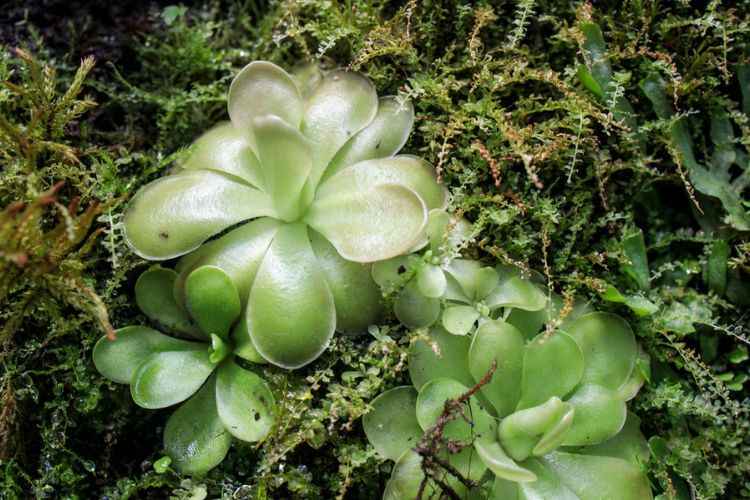
The largest butterwort, with leaves up to 12 inches across. Native to Mexico.
A single plant can catch hundreds of insects simultaneously. The sticky leaves don’t curl much—just digest prey in place.
Easier to grow than many butterworts, making it good for beginners wanting something impressive.
How Plants That Eat Bugs Capture and Digest Prey
Attracting Insects
These plants don’t just wait passively. They actively lure prey.
Nectar secretions are common. The sweet smell attracts flies, mosquitoes, and other insects.
Bright colors help too. Reds and purples signal “food here” to many insects. Some plants have UV patterns invisible to us but glowing beacons to bugs.
The Digestion Process
Once trapped, the real work begins.
Most carnivorous plants secrete digestive enzymes—chemicals similar to what’s in your stomach. These break down proteins in the insect’s body.
Phosphatases extract phosphorus. Proteases break down proteins into usable nitrogen compounds.
Digestion takes anywhere from days to weeks depending on the species and prey size.
Some plants—like cobra lilies—skip making enzymes entirely. They let bacteria do the work instead.
What Nutrients Do They Get?
Nitrogen is the big prize. It’s essential for plant growth but often scarce in bog soils.
Phosphorus comes second. It fuels energy production within plant cells.
Various minerals like potassium also get absorbed.
Plants that eat bugs can survive without catching anything. But they grow much better with regular meals. Flowering and seed production especially benefit from the extra nutrition.
Growing Plants That Eat Bugs at Home
Best Beginner Species
Start with forgiving plants:
Cape sundew (Drosera capensis): Nearly indestructible. Catches lots of bugs. Produces pretty pink flowers.
Venus flytrap: Everyone recognizes it. Satisfying to grow. Needs winter dormancy.
Mexican butterwort: Thrives on a windowsill. Low maintenance. Pretty flowers.
North American pitcher plant (Sarracenia): Hardy outdoors in most climates. Dramatic appearance.
Avoid difficult species like Nepenthes lowii or Darlingtonia until you have experience.
Critical Care Requirements
Water: This is where most people fail. Tap water kills carnivorous plants. The minerals—especially chlorine and dissolved salts—poison them over time.
Use only distilled water, rainwater, or reverse osmosis water. I collect rainwater in buckets specifically for my carnivores.
Soil: Regular potting soil is deadly. These plants evolved in nutrient-poor environments. Rich soil burns their roots.
Use a mix of sphagnum peat moss and perlite—50/50 works for most species. No fertilizer ever.
Light: Most want full sun. At least 4-6 hours of direct sunlight daily. South-facing windows work indoors. Grow lights help in dark rooms.
Strong light brings out red coloration in many species. Weak light produces pale, leggy plants.
Temperature: Temperate species (Venus flytraps, Sarracenia) need winter dormancy. They require a cold period—around 40°F for 3-4 months.
Tropical species (most Nepenthes, tropical sundews) prefer consistent warmth year-round.
Common Mistakes
The biggest killer is tap water. I cannot stress this enough.
Second biggest: wrong soil. Regular potting mix, fertilizer, or compost will kill these plants.
Third: triggering Venus flytrap traps for fun. Each trap has limited uses. Constant triggering wastes the plant’s energy.
Fourth: skipping dormancy. Venus flytraps and Sarracenia need winter cold. Keep them outside or in an unheated garage. Without dormancy, they weaken and die within a few years.
Plants That Eat Bugs for Pest Control
Do They Actually Help?
Honestly? They help some, but don’t expect miracles.
Sundews are excellent for fungus gnats—those tiny flies that hover around houseplants. A single Cape sundew on a windowsill catches dozens.
Butterworts work great against fruit flies and small flying insects.
Pitcher plants attract and trap houseflies.
But none of these will eliminate a serious infestation. Think of them as part of your approach, not the complete solution.
Best Species for Indoor Pest Control
For fungus gnats: sundews (especially Cape sundew or tropical varieties)
For fruit flies: Mexican butterworts or sundews
For houseflies: North American pitcher plants (if you have bright light)
Venus flytraps look cool but aren’t the most effective indoors. They need triggers touched twice, and flies are faster than you’d think.
Where to Buy Plants That Eat Bugs
Best Sources
Specialty carnivorous plant nurseries are ideal. California Carnivores, Sarracenia Northwest, and others ship healthy plants with expert advice. The International Carnivorous Plant Society maintains a vendor list of reputable sellers.
Local garden centers sometimes carry Venus flytraps, but quality varies wildly. Avoid plants in those tiny sealed plastic cubes—they’re death traps. The plants are often half-dead already.
Online marketplaces like Etsy have sellers of varying quality. Check reviews carefully.
Ethical Considerations
Never buy wild-collected plants. Venus flytraps are endangered in their natural habitat partly due to poaching.
Reputable nurseries propagate their own plants from seeds, cuttings, or tissue culture. Ask if you’re unsure.
Many carnivorous plant species are protected under CITES regulations. Buying responsibly supports conservation.
Final Thought
That birthday Venus flytrap my daughter received? It’s still alive three years later. We successfully overwintered it on our back porch, and it comes back bigger each spring.
Chomper has since been joined by a collection of sundews, a pitcher plant, and several butterworts. The fungus gnat problem I used to have? Mostly solved. Those little sundews on the kitchen windowsill catch them before they can multiply.
Plants that eat bugs are more than novelties. They’re fascinating examples of evolution, beautiful additions to any collection, and genuinely helpful garden companions. Plus, watching a Venus flytrap snap shut never gets old—even for adults who should probably be more mature about it.